Introduction
If you searched “When is first day of Hanukkah”, you want a straight answer fast and then useful details. This long article gives a clear one-line answer first, then builds out easy steps, a dates table, simple history, exact HowTo instructions for the first night lighting, recipes, travel tips for Europe, fashion tips, social ideas, and ready-to-use assets for TrendyOccasion.
I wrote this in simple English so anyone (even a teenager) can read and act. You’ll find practical tips you can use today: how to check local sunset, what to eat, where to see public menorah lightings in European cities, and how to add the holiday to your calendar.
TL;DR — Fast facts at a glance
- First night (2025): Sundown, Sunday, Dec 14, 2025 → first full day Mon, Dec 15, 2025.
- Hebrew date: 25 Kislev (this is the fixed Hebrew date).
- Length: 8 nights (ends on 2 or 3 Tevet depending on Kislev length).
- Why dates move: The Hebrew calendar is lunisolar — months follow the moon and years follow the sun, so Gregorian dates shift.
- How to mark first day: Light the menorah after nightfall on the evening that begins 25 Kislev.
Background & history — Why 25 Kislev matters
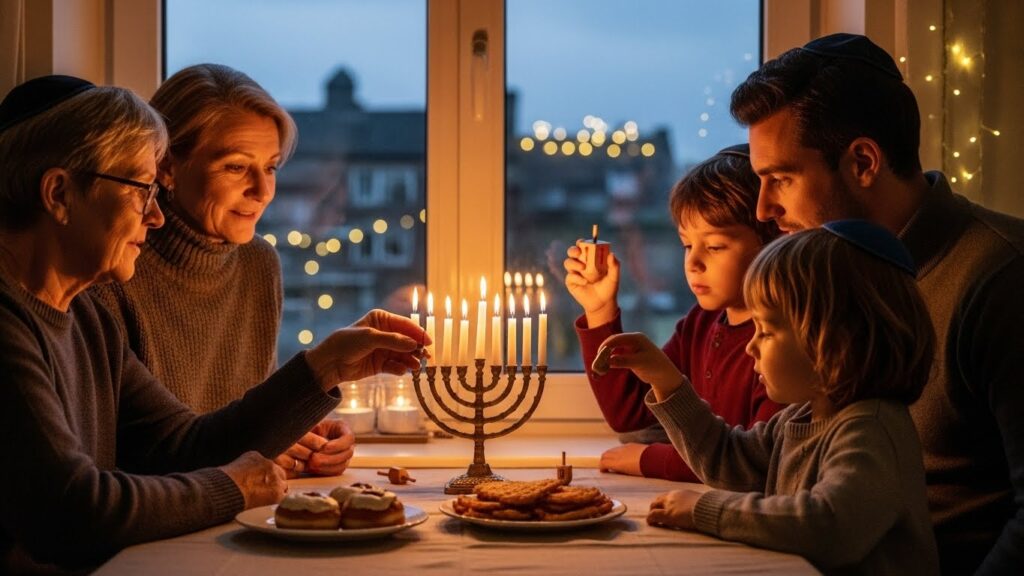
Hanukkah (also spelled Chanukah) remembers a 2nd-century BCE event. A group called the Maccabees fought to free the Temple in Jerusalem. When the Temple was rededicated they had only a small jar of oil to light the Temple lamp. That small oil miraculously burned for eight days. Because of that story people light candles for eight nights to remember the miracle.25 Kislev is the Hebrew calendar day that marks the start. The Hebrew calendar is fixed to that day, so the festival always begins on 25 Kislev — but the date looks different on our regular (Gregorian) calendar each year. That’s the basic reason Hanukkah “moves” on our modern calendar.
How the Hebrew calendar makes the date move (plain English)
Here is a short, friendly explanation:
- The Hebrew calendar is lunisolar. That means:
- Months are based on the moon (about 29.5 days).
- Years are adjusted to match the sun so seasons stay in place.
- Because lunar months don’t equal calendar months, the Hebrew system sometimes adds an extra month (Adar II). This keeps festivals in the right season.
- The result: the Hebrew date 25 Kislev maps to different Gregorian dates each year. Sometimes late November, usually December, sometimes even later.
Exact dates table — 2025 through 2030 (sundown → nightfall)
Use this table for fast planning. All dates list the evening the holiday begins (sundown) and the first full day that follows.
| Year | Hebrew Year | First night (sundown) | First full day (Gregorian) | Last night ends |
| 2025 | 5786 | Sun, Dec 14, 2025 — sundown | Mon, Dec 15, 2025 | Mon, Dec 22, 2025 — nightfall |
| 2026 | 5787 | Fri, Dec 4, 2026 — sundown | Sat, Dec 5, 2026 | Sat, Dec 12, 2026 — nightfall |
| 2027 | 5788 | Fri, Dec 24, 2027 — sundown | Sat, Dec 25, 2027 | Sat, Jan 1, 2028 — nightfall |
| 2028 | 5789 | Tue, Dec 12, 2028 — sundown | Wed, Dec 13, 2028 | Wed, Dec 20, 2028 — nightfall |
| 2029 | 5790 | Sat, Dec 1, 2029 — sundown | Sun, Dec 2, 2029 | Sun, Dec 9, 2029 — nightfall |
| 2030 | 5791 | Tue, Dec 18, 2030 — sundown | Wed, Dec 19, 2030 | Wed, Dec 26, 2030 — nightfall |
Reminder: Always confirm with a local calendar or synagogue for your city’s exact sunset/nightfall times.
What “first day” really means — night vs day
A key thing to know: the Jewish day begins at sunset, not at midnight. So:
- The first night is the evening you light the first candle.
- The first full day is the daylight hours that follow that evening.
When people ask “When is the first day of Hanukkah?”, many actually mean “When is the first night to light?” To avoid Confusion say “first night (sundown)” or “first full day (date)”.
How to celebrate the first night
Simple step-by-step: How to prepare and observe the first night
- Choose a visible, safe spot — a window, front step, balcony, or porch.
- Check local sunset and nightfall — use a reliable local calendar or synagogue time.
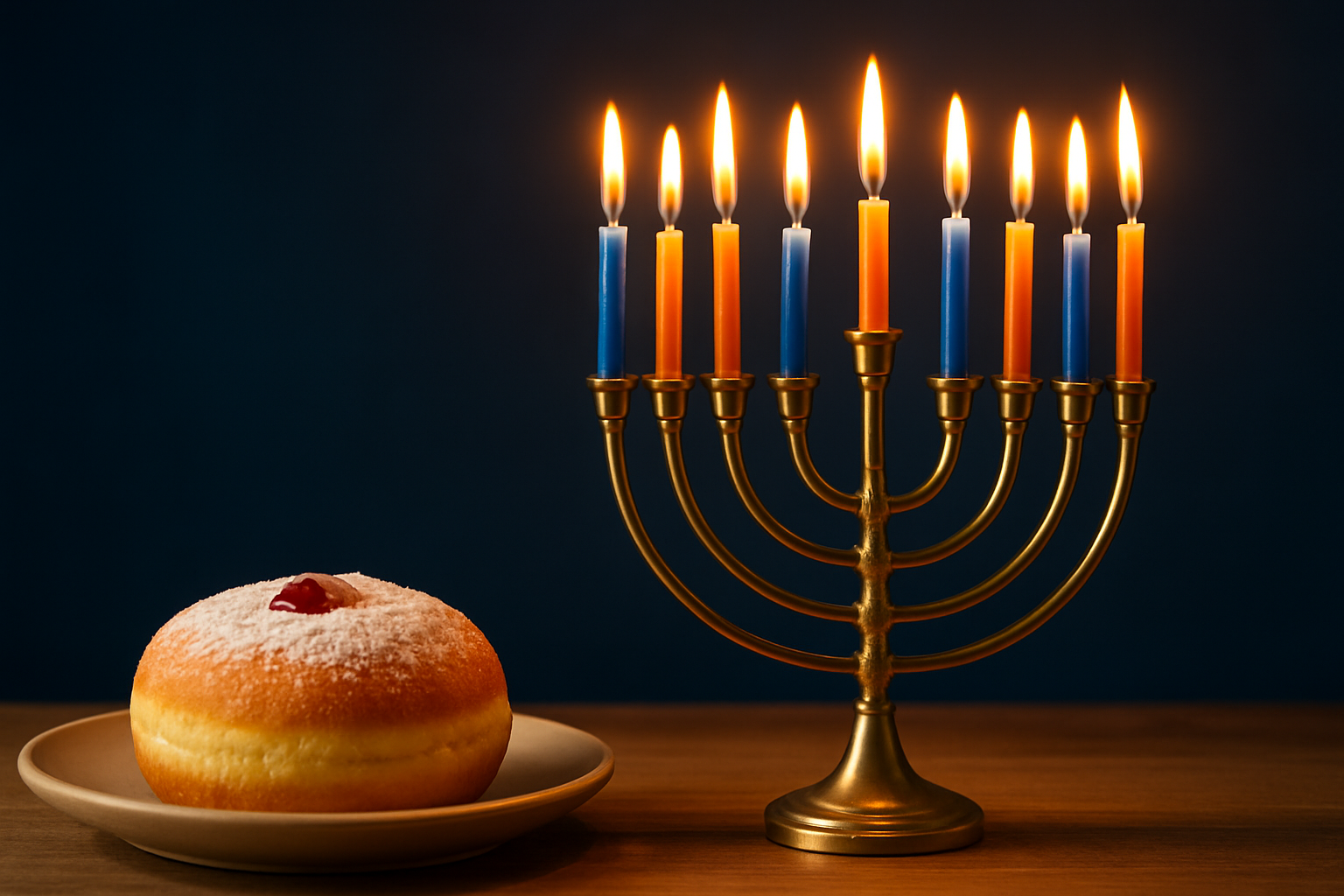
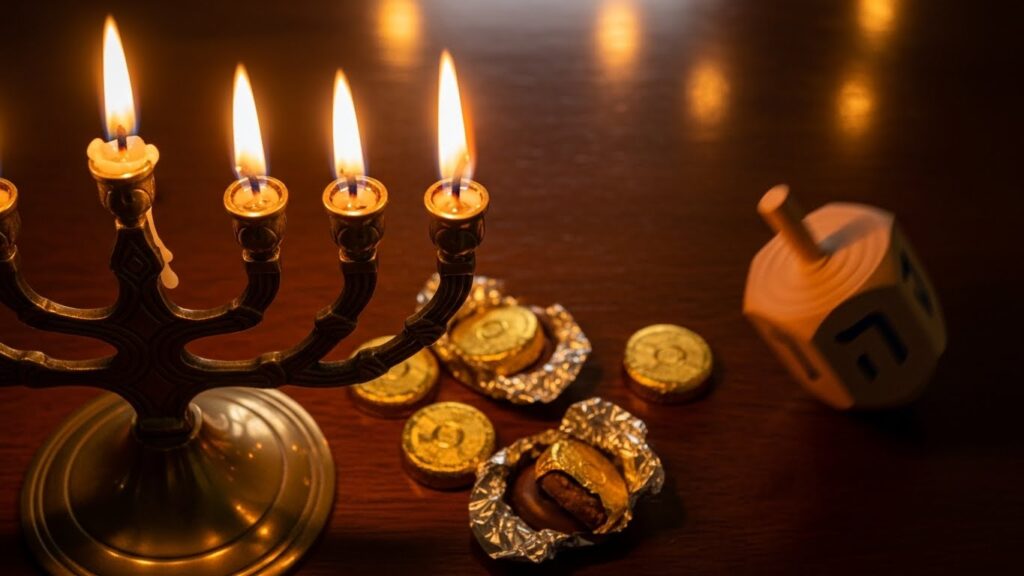
- Set up the menorah (chanukiah) and place the shammash (the helper candle).
- Light the shammash, say the blessings, then light the first candle and place it in the menorah. (Each night add one more candle.)
- Sing a short song or tell the Hanukkah story to guests or family.
- Enjoy food — latkes and sufganiyot are classic.
- Leave candles burning for the recommended time (often 30 minutes after nightfall or as your community follows).
- Share a photo online if you like, using tags like #Hanukkah, #FestivalOfLights or #TrendyOccasion.
Blessings & simple rules
On the first night many people say three blessings before lighting. One is the Shehecheyanu blessing — a short prayer said when a new or special time arrives (first night only). Exact words and customs can vary by community. If you want the precise text, check a synagogue guide or a community resource. When you put the blessings on your site, consider adding the transliteration and a recorded audio or printable PDF for readers.
Foods, songs & customs — what you’ll see and taste
Foods to expect:
- Latkes — potato pancakes, usually with applesauce or sour cream.
- Sufganiyot — jelly doughnuts, deep-fried and sweet.
Fun and culture:
- Dreidel — a spinning top game played with chocolate gelt or small coins.
- Songs — like “Maoz Tzur.”
- Gifts — small presents or chocolate coins (gelt).
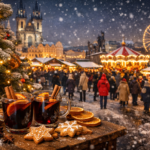
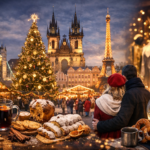
- Public lightings — many cities hold free menorah lightings in public squares with music and food stalls.
These customs are warm and family-friendly. They’re great for travellers who want a friendly, food-filled experience while visiting a city.
Hanukkah across Europe — places to see and why
If you like mixing travel with culture, here are places in Europe where Hanukkah is lively:
London
Big public menorah lightings, festive programs and community stalls. Great public access and central locations.
Paris
Local neighborhood gatherings, Chabad centers, and family events. Good food and local community culture.
Milan & Italy
City squares and synagogue programs — Milan mixes fashion and food nicely.
Berlin
Museums, big public menorah installations and family programs — good for history lovers.
Travel tip: Public events are usually free but crowded. Arrive early and check official event pages for exact times and transport info.

Fashion & lifestyle — what to wear (simple advice for winter)
Winter in Europe is cold. Pick warm and stylish:
- City-chic: wool coat, scarf, leather boots, subtle festive pin.
- Family outdoor: warm puffer jacket, hat, gloves, waterproof boots.
- Synagogue / formal event: smart-casual, modest clothes.
Travel tips & budget hacks for Europe
- Book early (November) for better flights and hotels.
- Combine a free public menorah lighting with a paid museum visit the next day.
- Use public transit — city centers may have traffic controls during events.
- Eat at local markets for cheap tasty snacks like mini-sufganiyot.
Quick comparison table — public events vs private observance
| Feature | Public Menorah Lighting | Private / Family Observance |
| Cost | Usually free | Varies (food, menorah) |
| Atmosphere | Loud, festive, communal | Quiet, personal, intimate |
| Best for | Tourists, big groups | Family tradition, worship |
| Photo ops | Big menorahs & performances | Cozy family photos |
| Accessibility | May be crowded/outdoors | Often easier for families |
Pros & Cons
Pros
- Strong community events in many cities.
- Great food and markets.
- Easy to combine with winter travel.
Cons
- Winter weather can be cold — dress warm.
- Popular events may be crowded.
- Customs differ by community — check local rules.
FAQs
A: No. Hanukkah usually falls between late November and late December. It follows the Hebrew lunisolar calendar, so the exact Gregorian date changes.
A: Light After Nightfall on the evening that begins 25 Kislev. Some people wait about 20–30 minutes after sunset or until a few stars are visible — check local custom.
A: Generally not. Most European countries do not treat Hanukkah as a national public holiday, though Jewish communities will have services and events.
A: Foods fried in oil to remember the miracle of the oil — especially latkes (potato pancakes) and sufganiyot (jelly doughnuts).
A: Use a trusted calendar site or your local synagogue which calculates sunset and nightfall for accurate lighting times. Many people use calendar tools that give city-specific sunset and nightfall times.
Conclusion
Hanukkah starts on 25 Kislev and in 2025 the first night begins at sundown on December 14, 2025, with the first full day on December 15. For readers in Europe, Hanukkah is a wonderful time for public menorah lightings, tasty food, and cozy family evenings.