Introduction
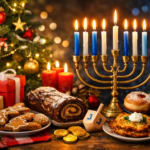
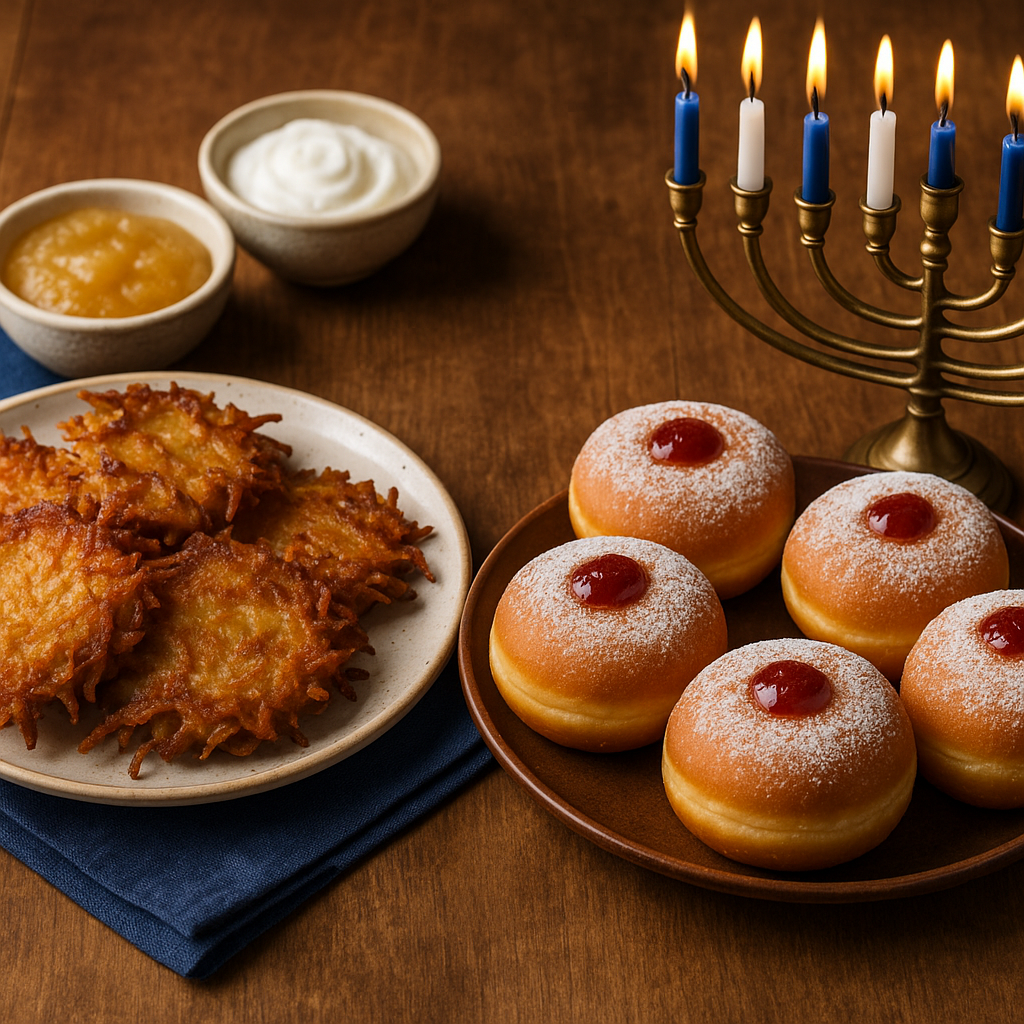
Hanukkah food is more than flavors on a plate. It,s memory, symbol, and celebration wrapped into every bite. People Worldwide eat Fried Treats like latkes (potato pancakes) and sufganiyot (jelly doughnuts) to remember the small jar of oil that lasted eight nights. Over decades and centuries, Jewish cooks in many places — especially across Europe — add local tastes and methods. That is why you now find a wide range of recipes and new ideas for these old dishes.
Short history: Why we eat fried foods
Hanukkah marks a historical event rededication of the Second Temple after the Maccabees’ victory. The oil story, which says a little lamps oil burned longer than expected, became the core symbol. Communities honored that,s eating food cooked in oil.
- Latkes: The ancestor of the latke is older than the potato latke. Early versions were made from cheese and grains. The potato latke emerged later in Eastern Europe when potatoes became common.
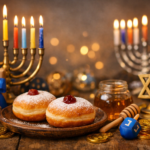
- Sufganiyot: These are close cousins of European filled doughnuts like the Berliner and ponchik. Sufganiyot became especially popular in Israel but also traveled back into European communities with changes of flavor.
European trends: Cities & local flavors
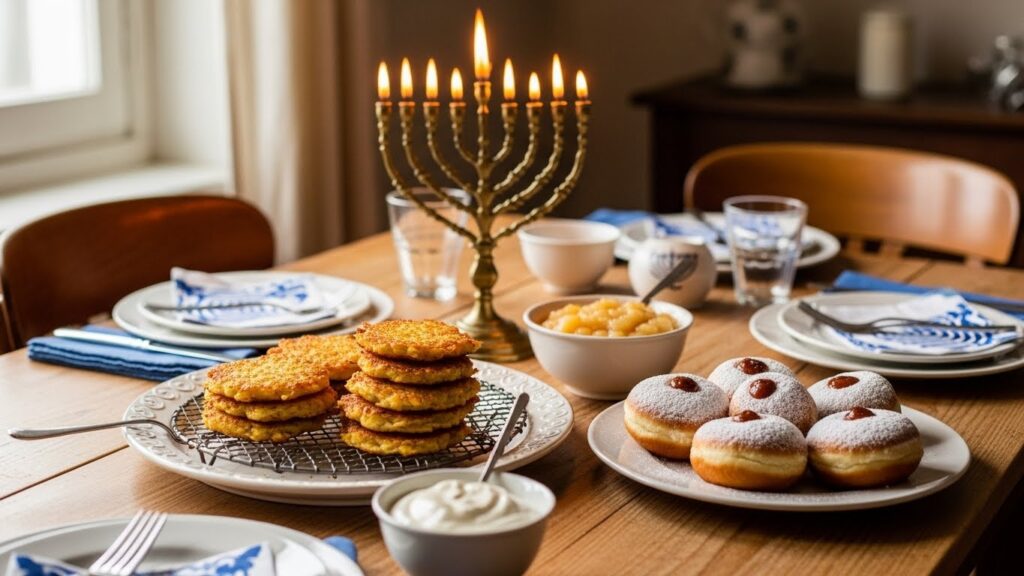
Europe shows a lively blend of old and new:
- London: You’ll find modern sufganiyot flavors (salted caramel, pistachio) in artisanal bakeries. Latkes may be plated with smoked salmon or mingled with beetroot.
- Paris: Pastry chefs bring orange zest, chocolate ganache, and elegant sugar work to doughnuts. The Marais hosts both Sephardic and Ashkenazi bakeries.
- Berlin: The scene includes food pop-ups and small Hanukkah markets where latkes, fritters, and modern twists show up.
- Milan & Rome: Mediterranean notes appear — olive oil fritters, honeyed pastries and fish dishes with citrus.
- Warsaw & Kraków: There is renewed interest in classic Eastern European recipes: potato latkes, blintzes, and hearty kugel. Heritage dinners and cultural events spotlight these dishes.
Mastering latkes — full recipe, pro tips & troubleshooting
Many pages list latkes, but few explain every detail that ensures consistent crispiness. This section is the deep, practical guide you should own.
Classic crispy potato latkes (serves 6–8)
Ingredients
- 3 lb (1.4 kg) starchy potatoes (russets), peeled
- 1 medium yellow onion
- 2 large eggs (room temp)
- 3 tbsp matzo meal (or plain flour; rice flour for GF)
- 1½ tsp fine salt (adjust)
- Freshly ground black pepper
- Neutral oil for frying (canola, sunflower) — enough for 1–1.5 in / 2.5–4 cm depth
- Applesauce and sour cream to serve
Equipment
- Box grater or coarse food processor disk
- Clean kitchen towel or cheesecloth
- Heavy skillet or cast iron pan
- Candy or frying thermometer
- Slotted spoon or spider
- Wire rack and baking tray
Method — step-by-step (clear)
- Grate potatoes and onion. Use a coarse side so you keep texture. A food processor with a coarse grater disk saves time.
- Drain thoroughly. Put the grated mix into a towel, twist and squeeze until very little liquid remains. This step is vital for crisp edges.
- Mix binder. Beat eggs, mix in matzo meal, salt and pepper. Fold in drained potato-onion mixture. If too loose, add 1 tbsp more matzo meal.
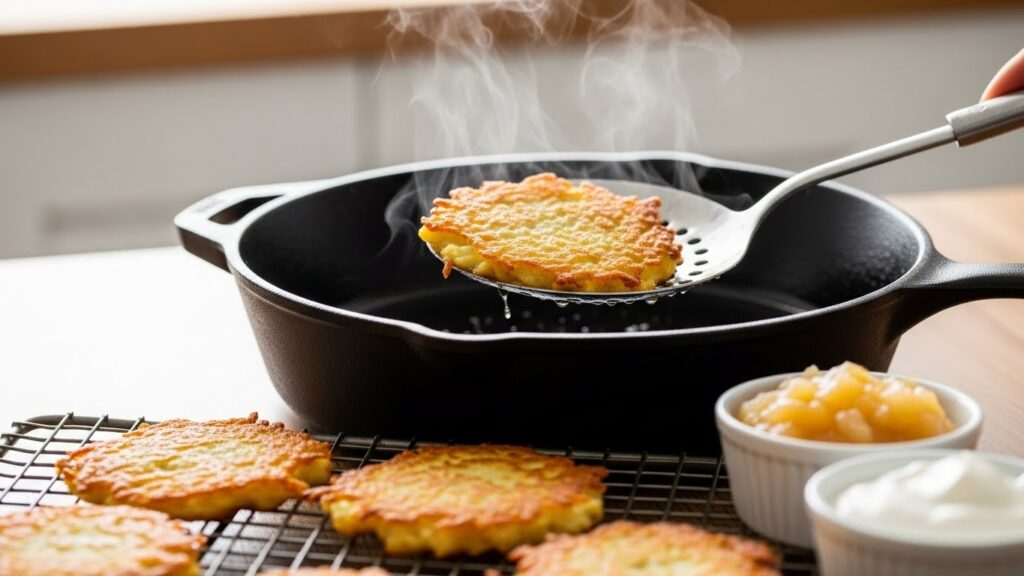
- Heat oil. Bring oil to 350–375°F (175–190°C). Keep it there. Use a thermometer — guessing burns flavor.
- Fry. Spoon the mix into the pan, flatten lightly to 2–3 mm thickness. Fry 2–3 minutes per side until deep golden. Don’t crowd the pan.
- Drain and hold. Place latkes on a wire rack over a tray and keep warm in a 200°F (95°C) oven until serving. Paper towels will make bottoms soggy — avoid them.
Pro tips — the small things that matter
- Drain, drain, drain. Excess moisture is the enemy of crispness. Squeeze until towel feels almost dry.
- Temperature matters. Plasticity of the cooking oil changes results. A stable 175–190°C gives the best crust: not oily, not burnt.
- Two-oil trick. Start with seasoned oil for color and finish batches with a splash of fresh oil to keep flavor clean.
- Binder balance. Use less egg + 1 tbsp potato starch for crisp edges; more egg makes latkes pillowy.
- Air-fryer option. Flatten thinner patties for the air fryer at 200°C (400°F) for 10–12 minutes, flip halfway. It’s lower oil but the edge texture changes.
Troubleshooting table (condensed)
| Problem | Cause | Fix |
| Greasy latkes | Oil too cool or overcrowding | Raise temp; fry small batches |
| Latkes fall apart | Too much moisture | Add matzo meal; chill mix |
| Burn outside, raw inside | Oil too hot | Lower temp; adjust distance from heat |
Perfect sufganiyot — dough, frying, fillings & variations
Sufganiyot take time and care but reward with a spectacular dessert table. With this guide, your sufganiyot can be light, tender, and perfectly filled.
Classic jelly sufganiyot (~12 pieces)
Ingredients
- 3½ cups (430 g) all-purpose flour
- 2¼ tsp active dry yeast (1 packet)
- ½ cup (120 ml) warm milk (≈40–43°C / 105–110°F)
- ¼ cup (50 g) sugar, plus extra for rolling/dusting
- 2 large eggs
- ¼ cup (60 g) softened butter
- 1 tsp fine salt
- Neutral frying oil (vegetable/canola)
- Jam, custard, or pastry cream for filling
Method — simple, full steps
- Activate yeast. Stir yeast into warm milk with a pinch of sugar; wait until foamy (5–10 min).
- Form dough. In a bowl, mix flour, sugar, salt, eggs, butter. Add yeast and knead into a smooth, elastic dough (8–10 min).
- First rise. Cover and rise until doubled (60–90 minutes at room temp).
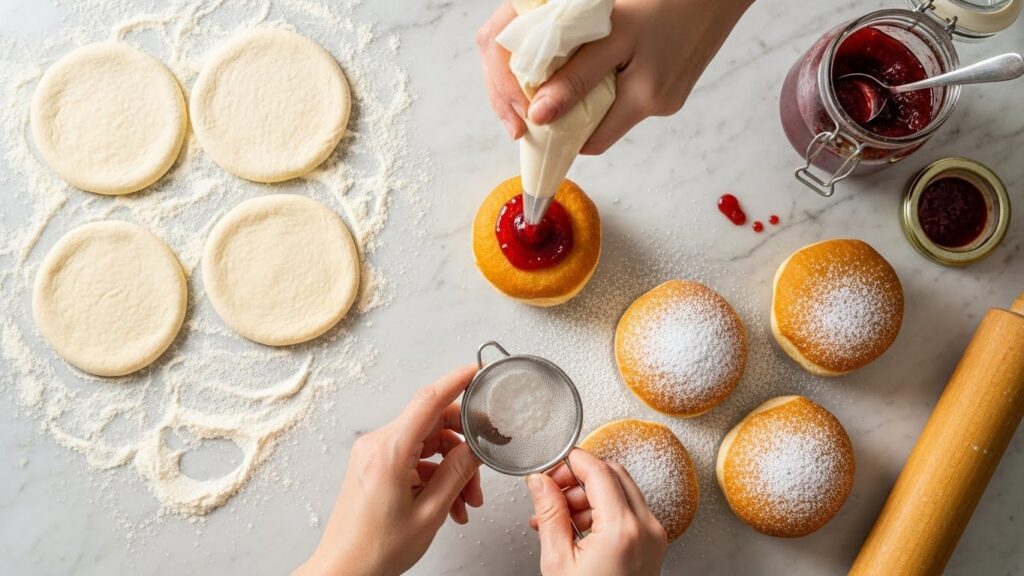
- Cut rounds. Roll to 1–1.5 cm thick; cut circles with a cutter. Place rounds on a tray and proof 30–45 min until puffy.
- Fry. In oil at 175–180°C fry 45–60 seconds per side. Keep batches small so oil temp stays steady.
- Fill & dust. Use a piping bag and fill from the side center; dust heavily with powdered sugar.
Pro tips & variations
- Preferment (poolish): Make a poolish the night before (equal parts flour and water with a pinch of yeast) to deepen flavor and improve crumb.
- Filling ideas: Classic strawberry jam, lemon curd, chocolate hazelnut, pastry cream, dulce de leche.
- Baked version: For big groups, bake small rounds and brush with simple syrup and dust sugar — texture differs but still tasty.
- Vegan filling: Use coconut cream pastry cream or jam. Use aquafaba for dough lift if avoiding eggs.
Mains, sides & desserts for a European-style Hanukkah table
Round out the menu with hearty mains, seasonal sides, and decadent desserts. European cooks often mix Ashkenazi and Sephardic tastes.
Mains
- Slow-cooked brisket with red wine, prunes and orange zest — a comforting main for colder nights.
- Braised lamb shanks with rosemary and garlic for a Mediterranean twist.
- Roast salmon with pomegranate glaze for lighter, festive options.
Sides
- Potato or noodle kugel: sweet or savory — a crowd favorite.
- Roasted root vegetables with thyme and citrus — fits northern European palates.
- Pickled beet or cucumber salad — bright counterpoints to fried dishes.
Desserts
- Rugelach and babka for coffee and after-meal treats.
- Sephardic bimuelos (fritters) glazed with honey and orange zest.
- Chocolate gelt or candied citrus for small sweet bites.
Dietary swaps: vegan, gluten-free & low-oil options
Make your content inclusive — many readers want alternatives.
Vegan swaps
- Latkes: Replace eggs with 1 tbsp ground flaxseed + 3 tbsp water per egg or 3 tbsp aquafaba. Add 1 tbsp potato starch if needed.
- Sufganiyot: Use plant milk and vegan butter. Replace eggs with aquafaba or commercial egg replacer.
Gluten-free swaps
- Use chickpea flour (gram flour) or certified gluten-free blends instead of regular flour. Increase binder (e.g., 1–2 tbsp extra starch) to hold shape.
Low-oil methods
- Air-fryer latkes: Flatten thin; cook at 200°C (400°F) for 10–12 min, flip once.
- Baked doughnuts: Bake at high temp and brush with a light syrup post-bake.
Hosting & menu planner: make-ahead schedule for 8–12 guests
Make-ahead timeline
| When | Tasks |
| 3–4 days before | Finalize menu, shop pantry items (oil, flour, sugar), order special jams and garnishes. |
| 2 days before | Defrost meat; bake desserts that keep well; prepare preferment for sufganiyot if using. |
| 1 day before | Cook kugel and chilled sides; prep latke mix (store up to 24 hrs in fridge); set table and labels. |
| Day of (4–5 hrs before) | Start slow-cook mains; proof sufganiyot dough; preheat oven for holding. |
| 2 hrs before | Heat oil; fry latkes and hold on wire racks in a 95–100°C oven. |
| 30–45 min before | Fry sufganiyot; fill and dust; finish plating; light menorah and serve. |
Shopping list & equipment
Must-have equipment
- Heavy skillet or 3–4 L Dutch oven (for stable oil temp)
- Candy/frying thermometer — non-negotiable for consistent frying
- Slotted spoon or frying spider
- Wire racks and sheet trays
- Box grater or mandoline for speed
- Stand mixer (optional) for sufganiyot dough
Pantry essentials
- Neutral frying oil (canola, sunflower) — buy fresh and in bulk for parties
- Flour (all-purpose and GF blend)
- Matzo meal or fine breadcrumbs
- Baking yeast (active dry) and sugar for dough
European buying tips
- Cold-pressed sunflower oil is common and neutral in many EU supermarkets.
- Local markets are great for preserved citrus, high-quality jams, and spices.
Tables & comparisons
Quick comparison: Latkes vs Sufganiyot vs Kugel
| Dish | Key feature | Time to make | Crowd factor | EU-style twist |
| Latkes | Crispy, savory, fried | 45–60 min | Very high | Pair with smoked salmon (London) |
| Sufganiyot | Sweet, filled, fried | 2–3 hrs incl. proofing | Very high | Orange-chocolate filling (Paris) |
| Kugel | Baked, versatile | 1–1.5 hrs | Medium | Apple or seasonal fruit (Poland / Germany) |
Pros & cons
Pros
- Hanukkah food is visually strong content — great for Pinterest and Instagram.
- Many long-tail search opportunities: vegan Hanukkah recipes, air-fryer latkes, sufganiyot troubleshooting.
- Printable assets can attract community shares and backlinks.
Cons
- Some recipes (sufganiyot) need time and skill — may deter beginners.
- Fried foods trigger health concerns — you must provide healthy swaps.
- Traffic is seasonal; keep evergreen elements to get year-round value.
FAQs
A1: Fried foods honor the oil miracle that lasted eight nights in the Temple.
A2: Drain potatoes well, fry at 175–190°C, keep on wire racks in a 95–100°C oven and don’t stack.
A3: They are a type of filled doughnut. They are similar but often made specially for Hanukkah.
A4: Yes. Use aquafaba or flax for eggs and gluten-free flours or chickpea flour for latkes.
A5: London, Paris, Berlin, Milan, Warsaw and Kraków often have community events and pop-ups.
Conclusion
Hanukkah food brings people together. The leading dishes — latkes and sufganiyot — connect to history and give cooks a chance to show skill and hospitality. In Europe, local tastes make each table unique: think smoky, cured fish in London, citrus and chocolate notes in Paris, and honeyed Sephardic treats in southern Europe.