Introduction
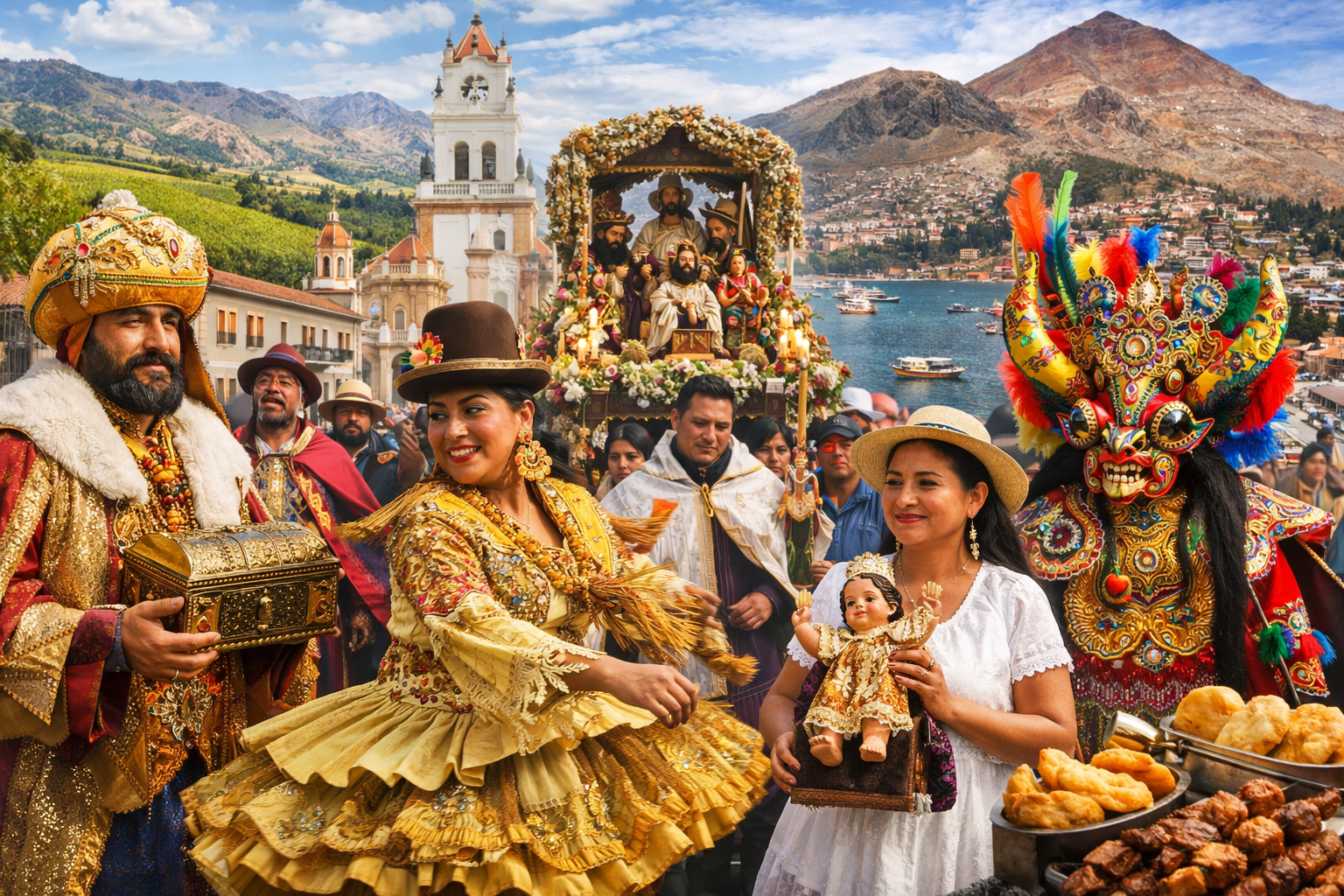
If you live in Europe and want a bright, local festival in January, Epiphany in Bolivia 2026 is a wonderful choice. On January 6, 2026, towns across Bolivia celebrate Día de los Reyes with processions, dances, music, and family gatherings. Bolivia’s Epiphany blends Spanish Catholic rituals with Andean music, colourful costumes, and lively streets full of life.
Why Epiphany in Bolivia 2026 is special
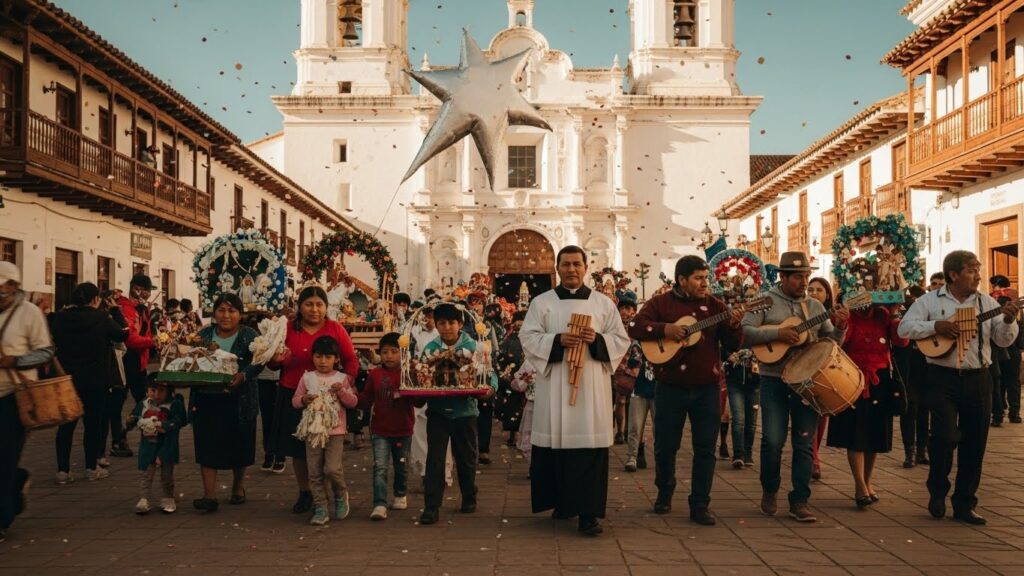
Epiphany is a Christian festival that remembers the Three Wise Men visiting baby Jesus. In Bolivia, people mix that story with local customs. You will see dancers in bright costumes, traditional music, and street processions with religious images. The difference from many European Epiphany events is scale and style: in Bolivia, the day often becomes a public festival—loud, colourful, and very communal. For a European traveller, Epiphany in Bolivia 2026 is a chance to see how a religious holiday is expressed through local arts, ritual, and family life.
Where to go: town-by-town guide
Here are the best places to experience Epiphany in Bolivia 2026. Each town has its own feel. Pick the one that matches your travel style—photography, food, quiet life, or big-city comforts.
Sucre — colonial beauty and family processions
Why go: White colonial buildings, neat plazas, and a calm atmosphere. Great for photos.
What happens: Churches hold masses; families stroll with nativity scenes; markets sell sweets and crafts.
Tip: Allow one day to adjust to altitude (≈2,800 m). Walk slowly and drink water.
Tarija — wine, valleys, and small local parades
Why go: Quiet valley town known for wine and friendly locals. Perfect for relaxed trips.
What happens: Small parades and village dances; good local food and small wineries open to visitors.
Tip: If you like wine, schedule a tasting with local producers.
Cochabamba — urban festivals and street food
Why go: City comforts plus lively street life. Good hotels and a wide food scene.
What happens: Town processions in the city, many food vendors, and bustling markets.
Tip: Combine festival time with a city sightseeing day.
Potosí — highland rituals and strong traditions
Why go: Dramatic mountain scenery and old mining history. Good for history lovers and dramatic photos.
What happens: Local dance troupes perform and markets show native crafts.
Tip: Nights are cold—bring warm layers and be careful with altitude.
Oruro & nearby villages — colourful costumes and dances
Why go: Famous for costume and dance tradition—less crowded during Epiphany than Carnival.
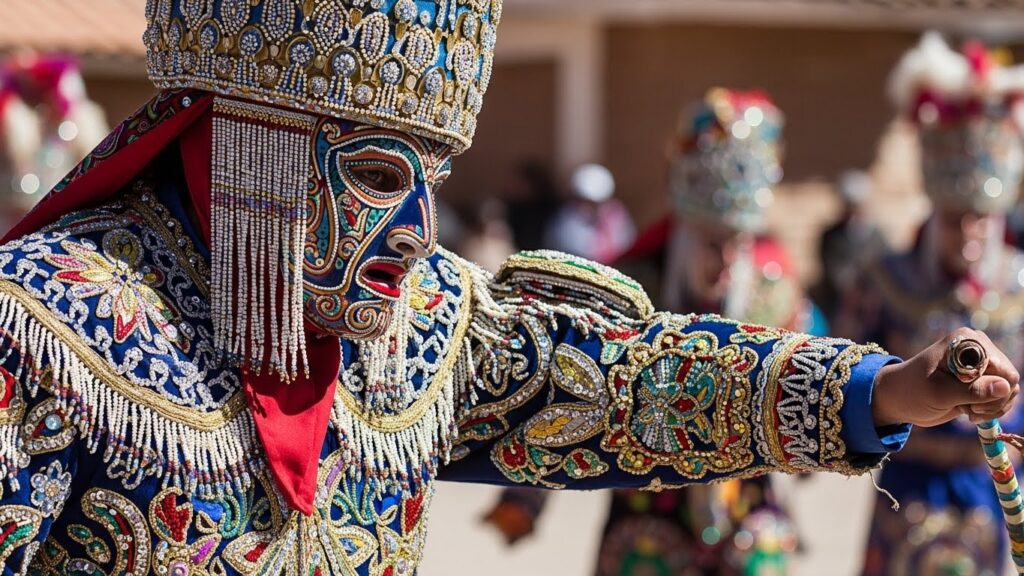
What happens: Local troupes perform dances like morenada and diablada in small-scale settings.
Tip: Bring a telephoto lens for detailed photos of masks and embroidery.
Reyes (Beni) — Amazon-edge patronal feasts
Why go: Remote and authentic, with river rituals and local music. Great for adventurous travellers.
What happens: Multi-day town feasts with processions and river ceremonies.
Tip: Travel here only if you are ready for rustic conditions and longer travel time.
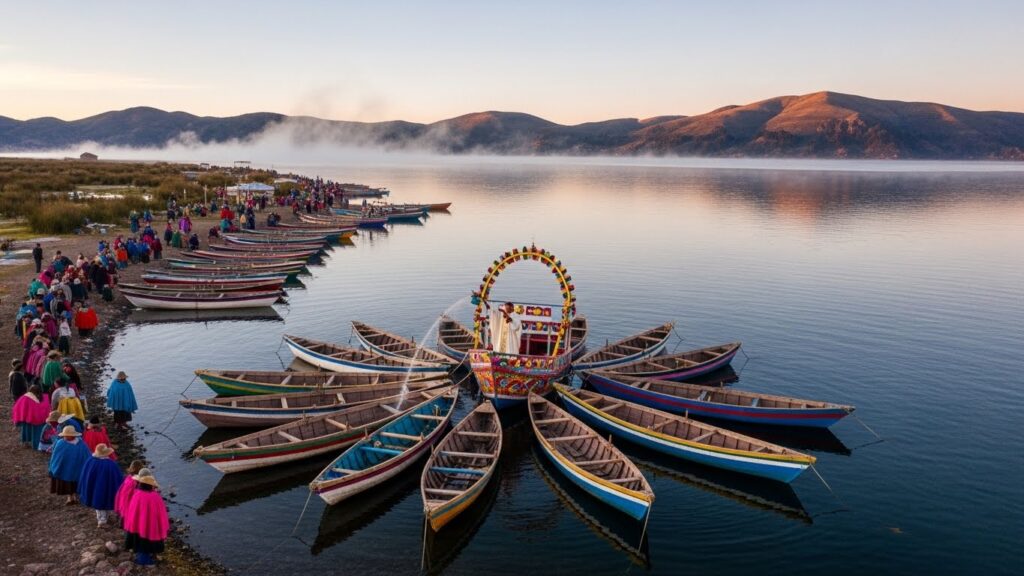
Copacabana (Lake Titicaca) — lakeside processions and boat blessings
Why go: Scenic lake views and spiritual pilgrimages—very photogenic.
What happens: Boat processions, lake blessings, and street markets selling crafts and food.
Tip: Book boats and local operators early for festival days.
Quick comparison table — choose your base
| Town | Best for | Crowd level (Jan 6) | Ease of access | Photo potential |
| Sucre | Culture & architecture | Medium | Flights or bus | High |
| Tarija | Wine & relaxed festivals | Low–Medium | Fewer flights | Medium |
| Cochabamba | City comfort & food | Medium | Good flight links | Medium |
| Potosí | History & highland rituals | Low–Medium | Bus / long drives | High |
| Oruro (villages) | Costumes & dances | Low | Bus or flight | High |
| Reyes (Beni) | Remote local feasts | Low | Long travel | Medium |
| Copacabana | Lakeside rituals | Medium | Bus from La Paz | High |
Planning: dates, travel, booking & weather
Dates & timing
- Main date: January 6, 2026.
- Local schedules: Many towns have Activities from Jan 3 to 7. Check local municipal pages, tourism sites, or social media pages in December for exact times.
Getting there — step-by-step
- Fly into La Paz (El Alto) or Santa Cruz (Viru Viru) — these are the main international airports.
- Use domestic flights to reach Sucre, Cochabamba, Tarija, and Oruro — these save long bus rides.
- Buses are cheaper and useful if you have time. Expect long travel days on mountain roads.
- Hire local guides for remote towns and river towns like Reyes.
Where to stay
- Sucre & Cochabamba: mid-range hotels and boutique hostales with comfort.
- Small towns: family-run hostales—book early.
- Tip: Reserve 6–8 weeks ahead for festival time to get the best options.
Weather & packing
January is summer in Bolivia but weather varies with altitude:
- Lowlands (Beni, Amazon): hot and humid—light, breathable clothing.
- Valleys (Tarija): warm days, cool nights—pack layers.
- Highlands (Sucre, Potosí, La Paz): cold nights, strong sun—thermal layers, sunblock, and a windproof jacket.
Simple Packing List
- Layers (T-shirts, fleece, thermal)
- Sun hat & high-SPF sunscreen
- Rain jacket or small umbrella
- Comfortable walking shoes (closed-toe)
- Basic first-aid kit + altitude meds if you need them
- Camera gear: both wide-angle and telephoto lenses, spare batteries
Food, drink & fashion (what to taste, what to wear)
Food to try during Epiphany in Bolivia 2026
- Street snacks: fried treats, empanadas, tamales, and sweet breads.
- Highland dishes: hearty soups, stews, and roasted meats.
- Tarija: local wine and light regional dishes.
- Copacabana: lake fish and lakeside specialties.
Fashion & style tips
You can look stylish while staying respectful. European travel fashion works well.
Outfit rules
- Blend, don’t copy. Wear modern clothes that complement local colour palettes. Do not wear sacred indigenous garments as costumes.
- Layers are stylish and useful. A neutral base with a bright scarf or hat looks great in photos.
- Shoes: comfortable closed shoes for walking on cobbles.
- Accessories: small crossbody bag, sunglasses, back-up phone battery.
Safety, money & health tips
Money & payments
- Currency: Boliviano (BOB). Carry small notes for markets.
- Cards: accepted in hotels and larger restaurants; small stalls may be cash-only.
- Tip: keep a small amount of cash in an accessible pocket for quick purchases.
Crowd safety
- Use a money belt or concealed pouch.
- Keep copies of your passport in a separate bag or phone photo.
- Beware of pickpockets in crowded plazas.
Health & altitude
- Take time to acclimatize when you reach high altitudes.
- Stay hydrated and avoid heavy alcohol on arrival day.
- Consider altitude pills (consult your doctor).
- Travel insurance that covers altitude-related evacuation is highly recommended.
Local rules & etiquette
- Respect processions—do not step into the path.
- Ask before filming religious leaders or ceremonies.
- Tip performers or vendors politely if you take posed photos.
Itineraries (choose one that fits your time)
Short trip — 3 days: Sucre Quick Break
- Day 1: Arrive Sucre, walk around Plaza 25 de Mayo at sunset.
- Day 2 (Jan 6): Morning mass, midday procession, artisan markets.
- Day 3: Museo visit and depart or continue travelling.
Medium trip — 7 days: La Paz → Copacabana → Sucre
- Day 1: Arrive La Paz, rest and gentle acclimatization.
- Day 2: Explore La Paz (cable cars, markets).
- Day 3: Bus to Copacabana on Lake Titicaca.
- Day 4 (Jan 6): Epiphany processions at Copacabana, boat ceremonies.
- Day 5: Fly to Sucre; evening at the artisan market.
- Day 6: Sucre Epiphany parades and local celebrations.
- Day 7: Day trip to Potosí or buffer day; depart.
Long trip — 10+ days: Deep cultural dive
Add Reyes (Beni) for Amazon-edge patronal feasts and remote villages near Oruro to see rural dance troupes. This works well for travellers who prefer slow, immersive trips.
Tables & step-by-step planning
Step-by-step festival planning (simple 6-step plan)
| Step | What to do |
| 1 | Choose your base town (e.g., Sucre, Tarija, Cochabamba) |
| 2 | Book international flights to La Paz or Santa Cruz |
| 3 | Book domestic flights and hotels early (6–8 weeks) |
| 4 | Check municipal pages for festival times in December |
| 5 | Pack for altitude and changing weather |
| 6 | Bring camera gear and always respect local culture |
Comparison table — travel style vs town
| Travel style | Best town | Why |
| Photography & architecture | Sucre | Clean colonial backdrops and good light |
| Food & wine | Tarija | Vineyards and local gastronomy |
| Urban comfort | Cochabamba | Easy logistics and good food |
| History & altitude | Potosí | Mining heritage and highland rituals |
| Costumes & dances | Oruro villages | Rich dance tradition and masks |
| Remote & rustic | Reyes (Beni) | River rituals and local life |
| Scenic & spiritual | Copacabana | Lake Titicaca processions and boat blessings |
Pros & Cons
Pros
- Authentic cultural experiences beyond tourist shows.
- Vibrant, colourful costumes and music—very photogenic.
- Many towns celebrate with unique local twists—great for multiple stops.
Cons
- Travel between towns can be slow or complex.
- Altitude can cause illness for some people.
- Not all event info is in English—plan to use local guides or translation help.
FAQ
A1: The main date is January 6, 2026. Many towns hold related events between January 3 and 7. Check local municipal pages for the exact program.
A2: Epiphany is widely observed in Bolivia but it is not always a national bank holiday. Local observance varies by town.
A3: The top places are Sucre, Tarija, Cochabamba, Potosí, Oruro (villages), Reyes (Beni) and Copacabana (Lake Titicaca). Choose a town based on whether you want colonial architecture, food and wine, or lakeside rituals.
A4: Most processions and masses are free. For special shows, concerts, or boat trips on Lake Titicaca, book in advance.
A5: Pack layers, sun protection, a rain jacket, sturdy walking shoes, any altitude medication if needed, and small bills (Bolivianos) for vendors.
Conclusion
Epiphany in Bolivia 2026 is a brilliant option for European travellers who want lively, authentic cultural experiences in January. Choose the town that fits your interests—colonial vistas in Sucre, wine in Tarija, city life in Cochabamba, highland rituals in Potosí, costumes near Oruro, remote feasts in Reyes, or lakeside events in Copacabana. Book your travel early, pack for altitude and changing weather, respect local customs and rituals, and enjoy the vibrant displays.