Introduction
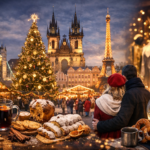
The Winter Months in Europe are full of light, music, and togetherness. Streets glow with strings of lamps, markets fill with smells of sweet bread and hot drinks, and homes put up Christmas trees and sometimes menorahs in windows. People often ask: what are the real differences between Christmas vs Hanukkah? Can families celebrate both? What simple Chrismukkah ideas keep both traditions respectful?
This long guide answers those questions in plain, clear language. It explains the background and meaning of each holiday, shows the most common traditions, gives easy recipes and safety tips, and includes step-by-step plans for interfaith families who want to celebrate both
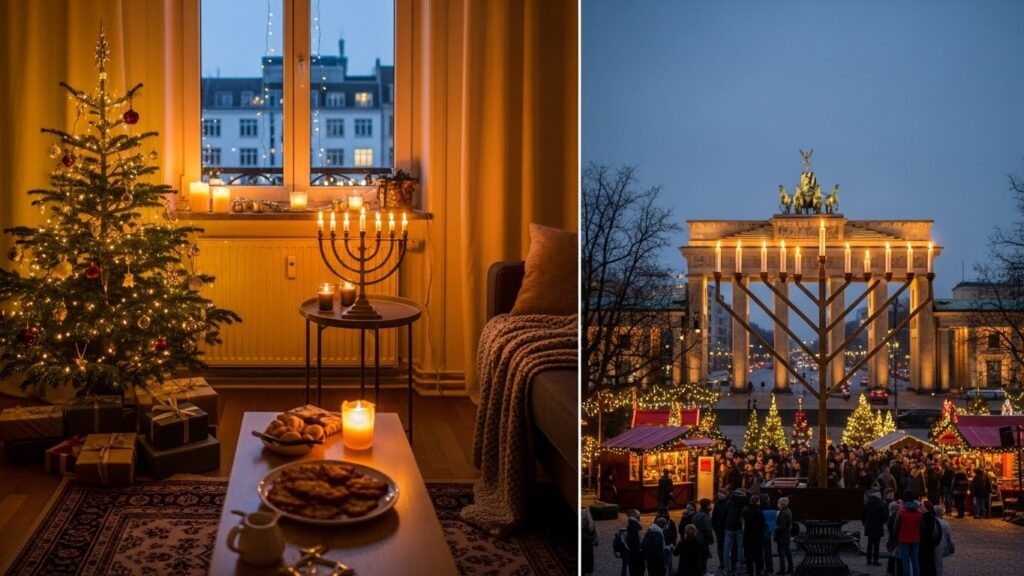
Comparison Table — Christmas vs Hanukkah
| Feature | Christmas | Hanukkah |
| What it celebrates | Birth of Jesus (Christian belief) | Rededication of the Second Temple; the oil miracle |
| When | December 25 (fixed) | 8 nights from 25 Kislev (Hebrew lunisolar calendar) |
| Religious importance | Major Christian holy day | Historically a minor Jewish festival; grew in cultural visibility |
| Main rituals | Church services, nativity, tree, lights, gift-giving | Nightly menorah lighting, blessings, dreidel, fried foods |
| Foods | Roast, cookies, panettone, bûche de Noël | Latkes, sufganiyot, foods fried in oil |
| Public visibility | Global markets, public holidays | Varies by country; growing public menorahs and events in Europe |
| Blending | Often secularized (tree, lights, Santa) | Often blended into Chrismukkah in interfaith homes |
| Family fit | One big day with Advent period | Eight nights — flexible for busy families |
Background & History
What is Hanukkah?
Hanukkah (also spelled Chanukah) remembers events from about 2,200 years ago. The Maccabees were a small Jewish group who fought to restore their right to practise religion in Jerusalem when foreign rulers changed the Temple and its rituals. After the Temple was retaken, the story goes that the Temple lamps had only a very small amount of holy oil left — oil enough for one day — but it burned for eight nights while new oil was prepared. People remember that miracle by lighting a hanukkiah (menorah) for eight nights, saying blessings, singing songs, and sharing fried foods. Over centuries, Hanukkah became a family-centered celebration with strong home rituals like lighting candles, playing dreidel, and giving small treats or gelt (coins or chocolate coins).
Why do people celebrate Christmas on December 25?
Christmas marks the birth of Jesus for Christians. The church set December 25 as the day to celebrate long ago. Historians suggest the date was chosen for several reasons, including linking Christian worship to existing winter festivals and liturgical calendars in the Roman world. Over time, Christmas became a central event in Christian calendars. Traditions like carols, nativity plays, church services such as Midnight Mass, the Christmas tree, and gift-giving developed across centuries. These practices mixed religion, family life and local culture, creating the modern mix of sacred and secular customs we see today.
Why the dates are different
The reason the holidays move differently on the civil calendar is simple:
- Christmas uses the Gregorian (solar) calendar and stays on December 25 every year.
- Hanukkah uses the Hebrew (lunisolar) calendar and always starts on 25 Kislev, but this date shifts on the Gregorian calendar. That is why some years Hanukkah and Christmas overlap closely and other years they are weeks apart.
Traditions, Symbols & Rituals — a clear guide
Lighting & symbols
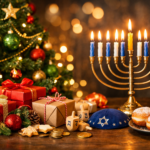
- Hanukkah: The hanukkiah (commonly called a menorah in English) has nine branches: eight for each night and one shamash (helper candle) used to light the others. Each night a new candle is lit, and families say blessings and sometimes sing songs. The candlelight symbolises hope, faith and the miracle of the oil.
- Christmas: Symbols include the Christmas tree, lights, stars, nativity scenes (a small display of Mary, Joseph, baby Jesus and animals), and candles. Lights represent hope, warmth and community in the dark winter season.
Food and treats
Food traditions help people remember and enjoy their festivals.
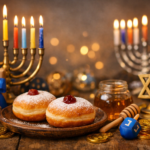
- Hanukkah foods: Foods fried in oil are traditional — latkes (potato pancakes) and sufganiyot (jam-filled doughnuts). These remind people of the oil that lasted eight nights. Jewish communities across Europe also have local dishes that join the Hanukkah table.
- Christmas foods: Vary widely across Europe. Common items include roasted meats or poultry, biscuits and cookies, panettone in Italy, bûche de Noël in France, and stollen in Germany. Seasonal markets often sell regional treats and festive drinks like mulled wine.
Music, services & community
- Christmas services: Midnight Mass, carol services, nativity plays, and church concerts are common. Cities often host public events and concerts that bring people together.
- Hanukkah: Much of Hanukkah is home-based. Families light the hanukkiah, sing traditional songs, tell the Hanukkah story, and play dreidel. Synagogues and Jewish community centres also hold events, candle-lightings and community meals.
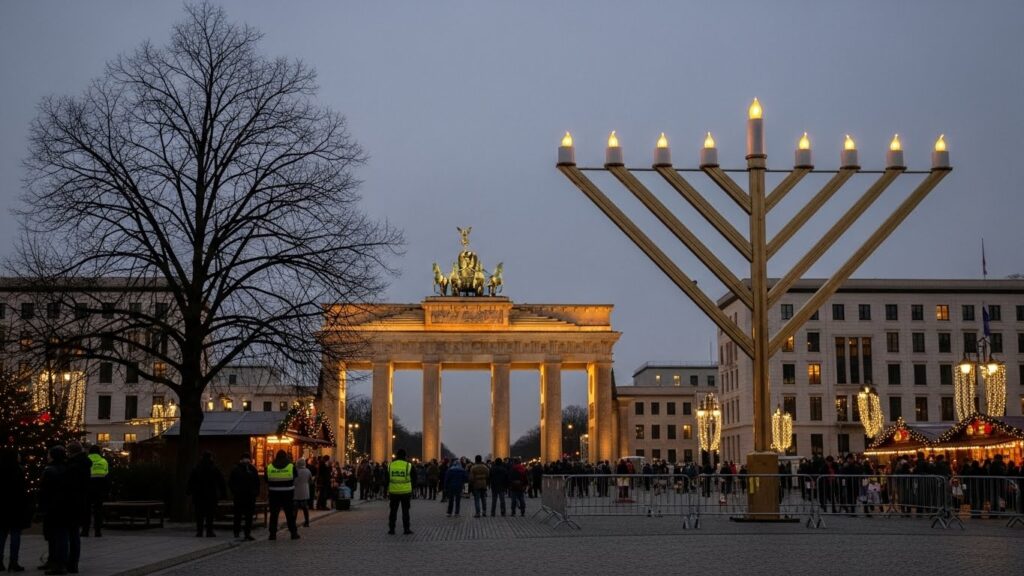
How Hanukkah in Europe has changed and grown
In many European countries, Hanukkah is more visible now than it was a few decades ago. Reasons include:
- Community organisation: Jewish communities put on public menorah lightings, concerts and family events.
- Civic inclusion: Local authorities are more likely to include menorahs in public displays during winter.
- Cultural exchange: Schools and multicultural programs teach about many winter holidays, so children learn about Hanukkah in class.
- Media and influencers: Social media and public figures show blended celebrations and make Hanukkah more familiar.
This growth makes Hanukkah easier to find in big cities and popular tourist spots. Still, visibility varies by country and city size.
Chrismukkah & Interfaith Celebrations — practical, respectful tips
What is Chrismukkah?
Chrismukkah is a playful name used by people who mix Christmas and Hanukkah customs in the same household. It became more popular through TV shows, celebrities, and cultural conversation. In interfaith families, Chrismukkah can be a way to celebrate both backgrounds without losing respect for either tradition.
Simple and respectful Chrismukkah ideas
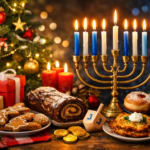
- Do both rituals: Light the hanukkiah at dinner and keep a modest tree in another corner. Do not hide or replace one ritual with the other; treat both as meaningful.
- Alternate focus nights: On some nights, make Hanukkah activities central. On other nights, have a Christmas-themed family evening with carols or a short Nativity story for children.
- Food sharing: Make a menu that works for everyone. If someone keeps kosher, plan dishes that are kosher-friendly or set up separate plates so all guests feel included.
- Gift plan: Decide as a family whether you’ll give small Hanukkah gifts each night and a single Christmas gift, or use one combined system. Clear rules help avoid stress.
- Create new rituals: Families can invent their own respectful rituals, like a shared story time, a night of volunteer work, or a candle of gratitude together each evening.
- Teach children: Use simple stories and craft activities to explain both holidays in age-appropriate ways.
Respect and boundaries
Talk openly about what matters most to each person. Some family members want to keep certain rituals purely religious and not blend them. Others enjoy creative blending. Respecting those boundaries keeps families comfortable.
Safety tips for blended displays and public events
Candles and decorations are beautiful but can be risky. Follow these safety rules:
- Keep candles and open flames away from dry trees, curtains, paper and fabrics.
- Place the hanukkiah on a steady, non-flammable surface.
- Do not leave candles unattended. Blow them out if you leave the room.
- Use LED or electric menorahs in public events or crowded spaces.
- Keep a small fire extinguisher or water nearby when using many candles.
- Supervise children near candles and matches.
European Trend Insights — where and how cities celebrate
London
London has active Jewish communities and public menorah lightings in several boroughs. The city also has big Christmas markets, concerts and family events. Borough-level community centres coordinate menorah lightings and family programming, which can include joint activities with other communities.
Paris
Paris features a vibrant Jewish quarter in Le Marais and public menorah events in central areas. Visitors can combine Hanukkah activities with Paris’s famous Christmas illuminations on major streets and markets.
Berlin
Berlin has become a visible center for both Christmas and Hanukkah events. Annual menorahs appear in public squares and events at spots like the Brandenburg Gate, alongside traditional Christmas markets and cultural programming.
Other European hubs
Cities including Amsterdam, Milan, Prague, Kraków and Stockholm host menorah lightings, synagogue events and seasonal markets. These cities are good for travellers who want to experience both traditions.
Fashion & Lifestyle — how to dress and look seasonable
Europe mixes smart style with winter warmth. Here are simple outfit ideas for holiday events.
Casual menorah night
- Outfit: Cozy sweater or cardigan, jeans or warm trousers, comfortable boots.
- Extras: A pattern scarf, small festive pin or a star brooch to make photos pop.
Festive Dinner
- Men: Wool blazer or smart jacket, knit sweater, dark trousers and leather shoes.
- Women: Midi dress, velvet blazer or chic knit, simple necklace or earrings.
- Children: Fun but warm clothes with a festive touch (star print or blue and white for Hanukkah).
Market strolls & public lightings
- Waterproof coat, insulated boots, warm hat, gloves and a large scarf.
- Add one bright accessory to show festive spirit and look good in photos.
Designers and influencers often show “holiday capsule” wardrobes: a few pieces that mix well and cover many occasions.
Food, Culture & Activities — what to eat and do
Easy Hanukkah recipes (simple steps)
Latkes (potato pancakes)
- Grate raw potatoes and a small onion.
- Squeeze out extra liquid, mix with an egg, a little flour, and salt.
- Fry spoonfuls in hot oil until golden and crisp.
- Serve with applesauce or sour cream.
Sufganiyot (quick version)
- Buy small jam-filled doughnuts or use ready dough, fry, and dust with powdered sugar.
- Alternatively, bake small jam-stuffed buns for an easier, lower-oil version.
Classic Christmas treats in Europe
- Germany: Try glühwein (mulled wine), roasted chestnuts and stollen.
- Italy: Panettone or torrone (nougat).
- France: Bûche de Noël (a rolled cake shaped like a log) and rich pastries.
Activities for kids and families
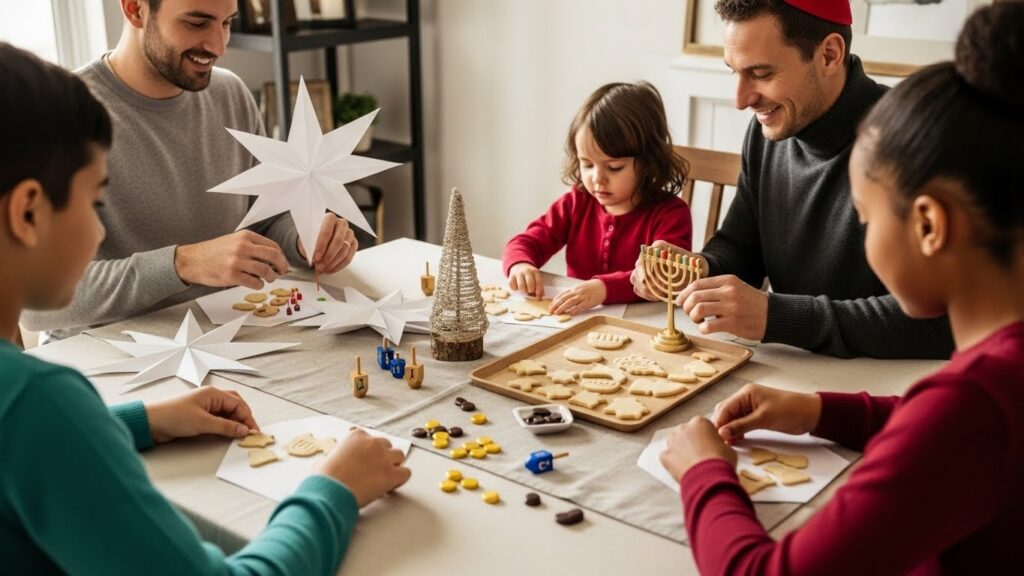
- Dreidel station: Teach kids the simple dreidel game using chocolate coins or small tokens.
- Crafts: Make paper menorahs, star ornaments, or simple nativity figures.
- Cookie decorating: Bake plain cookies and set up stations with icing and sprinkles for both Hanukkah and Christmas shapes.
Travel Tips — best times and places to visit
Best time to travel
- Early to mid-December is ideal for catching menorah lightings and early Christmas markets.
- Late December offers peak Christmas market energy and holiday programming. Remember that Hanukkah dates change each year — check the Hebrew calendar before booking.
Top city picks
- Berlin: Christmas markets plus public menorah at major sites.
- Paris: Le Marais for Hanukkah and Champs-Élysées for lights and markets.
- London: Borough events, big markets and cultural programming.
- Prague & Kraków: Historic settings with growing Jewish cultural events.
Budget tips
- Use regional rail passes and book centrally located lodging to save time and transport costs.
- Many menorah events are free; pay for special concerts and dinners in advance to avoid sell-outs.
How to plan a harmonious interfaith holiday evening
- Talk first. Each person lists the one or two rituals that matter most to them.
- Pick a schedule. Choose when to light the hanukkiah and when to have your main meal. Stagger events to give both traditions space.
- Plan the menu. Decide on one kosher-friendly main dish plus a shared dessert, or separate plates to respect dietary rules.
- Create sacred spaces. Keep the menorah on a safe table and the tree in another corner so both are visible and respected.
- Make kid-friendly activities. Dreidel games, ornament crafts and short stories help children learn about both holidays.
- Check safety. Keep candles and matches away from decorations and never leave them alone.
- Reflect afterwards. Talk about what worked and what to change next year to keep the celebration meaningful.
Detailed Comparison Table — features breakdown
| Area | Christmas | Hanukkah | Notes |
| Religious focus | Birth of Jesus | Temple rededication | Different theology and meaning |
| Public events | Large markets, concerts | Community menorah lightings | Both can be visible publicly |
| Gifts | Central to modern practice | Varies; gift-giving added culturally | Cultural differences matter |
| Food | Roasts, sweets | Fried foods | Symbolic foods differ |
| Ritual length | One main day (plus Advent) | 8 nights | Hanukkah allows multi-night celebration |
| Cost | Can be high with gifts and travel | Often lower; home-based rituals | Depends on family choices |
Pros & Cons
Pros
- Cultural richness: Learning both holidays brings stories, songs and new experiences.
- Family time: Both holidays create moments for relatives to gather.
- Scheduling flexibility: Hanukkah’s eight nights give families options for busy schedules.
- Public inclusion: Menorah lightings in public places help make winter season inclusive.
Cons
- Possible dilution: Mixing rituals can make some feel the sacred meaning is weaker.
- Logistical friction: Dietary rules and timing can require careful planning.
- Safety concerns: Candles and decorations must be handled with care.
- Commercial pressure: Holiday shopping can overshadow reflective practices.
FAQs
A1: No. They are different. Hanukkah remembers the rededication of the Temple and the miracle of oil. Christmas remembers the birth of Jesus. Both take place in winter and share lights and family time, but they have different religious stories and meanings.
A2: Hanukkah follows the Hebrew lunisolar calendar. It always starts on 25 Kislev, but that date moves on the civil (Gregorian) calendar each year. This is why Hanukkah sometimes overlaps with Christmas and sometimes falls earlier or later.
A3: Put the hanukkiah on a steady, non-flammable surface away from the tree and curtains. Keep an eye on open flames at all times. Consider electric or LED menorahs for crowded or public places.
A4: Yes. Cities like Berlin, Paris and London hold public menorah lightings and family events. Check local Jewish community calendars and event pages for exact dates and times.
A5: TrendyOccasion provides travel guides, city event calendars, outfit ideas, and quick recipe videos for European readers planning festive trips or blended celebrations. Use the site for local tips and seasonal inspiration.
Conclusion
Both Christmas and Hanukkah bring light, warmth and family time to the winter months. They have different origins and sacred meanings, yet in modern life they often coexist in the same cities, schools and households. When people plan celebrations that include both Christmas and Hanukkah, the keys are respect, communication, and safety. Talk with your family about what matters most, plan a schedule that honours each tradition, and keep candles and decorations safe.