Introduction
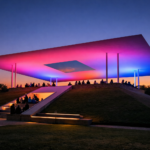
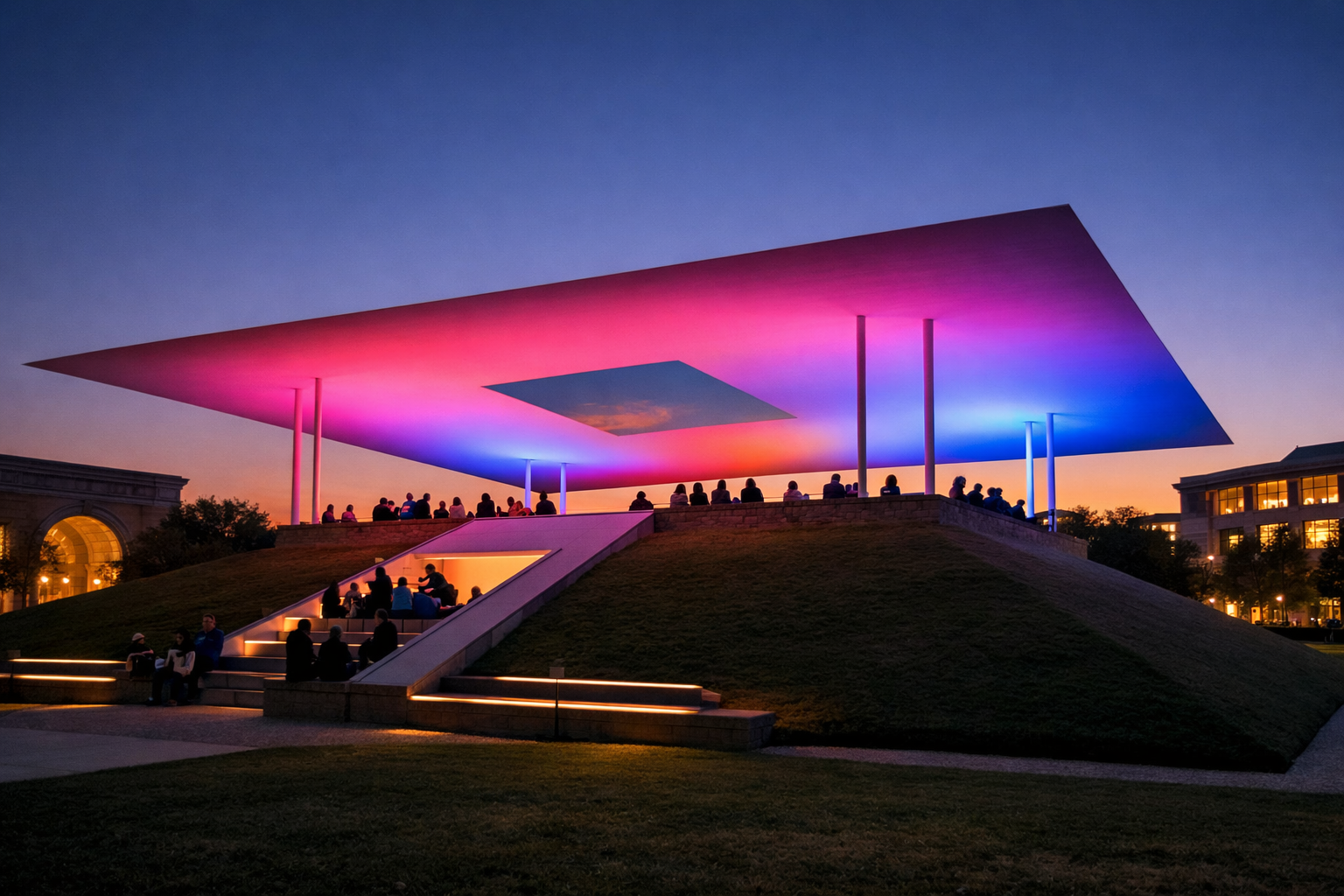
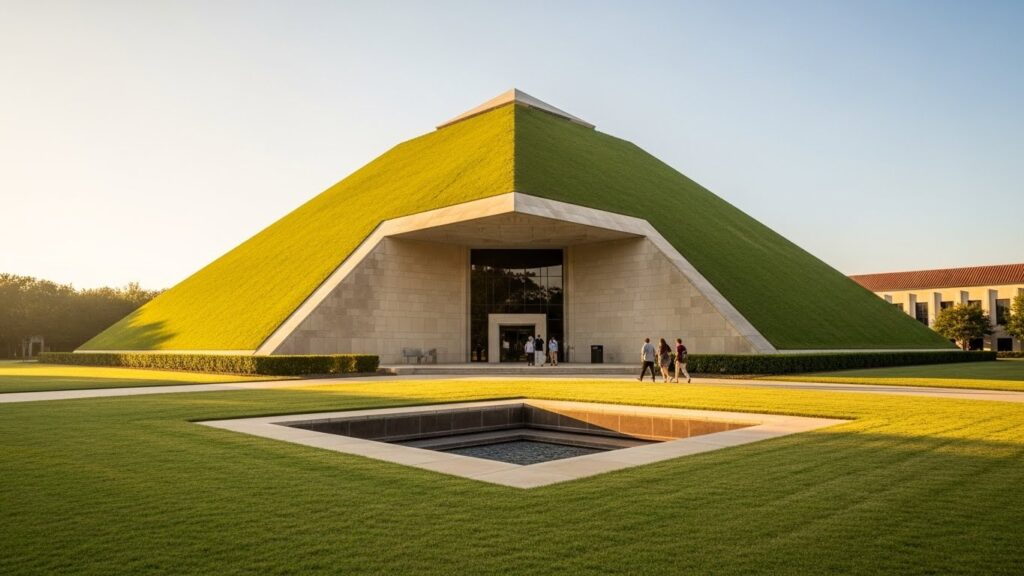
If you love art, color, and quiet moments, Twilight Epiphany is a special place to visit. This work by James Turrell sits at Rice University in Houston. It looks like a small building with a square hole in the roof. During sunrise and sunset, the lights inside change slowly. The glow alters how the sky appears. The result is calm, curious, and beautiful.
What is Twilight Epiphany?
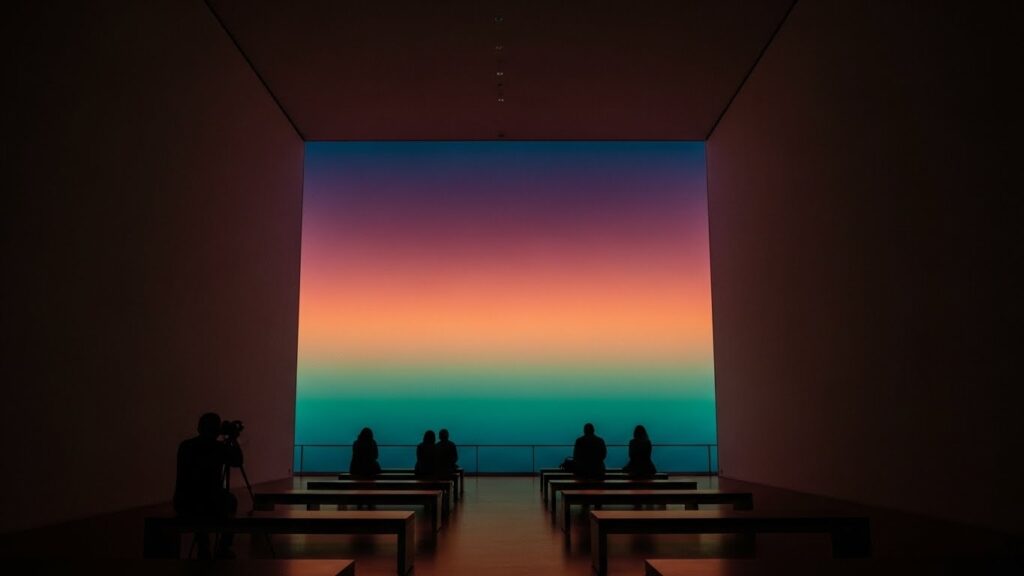
Twilight Epiphany is a Skyspace by the artist James Turrell. A Skyspace is a room or pavilion with a hole cut in the ceiling that frames the sky. Turrell adds controlled coloured light inside the space. The lights change during sunrise and sunset. This makes the sky and colors look unusual and lovely.
At Rice University, the Skyspace sits within the Suzanne Deal Booth Centennial Pavilion. Visitors sit on benches and watch as the light program unfolds. This is both an artwork and a gentle public show. The effect depends on weather, the season, and how your eyes adapt — so each visit can feel new.
Why this skyspace matters — three simple reasons
Perception experiment. Turrell’s art teaches us about seeing. The piece plays with your vision, showing how color and light can change what you believe is true about the sky.
Scale and place. The Rice installation is large and placed on a campus. It is one of Turrell’s bigger public works. The setting, the architecture, and the surrounding lawn all shape the experience.
Daily ritual. The light sequences run at sunrise and sunset (when the Skyspace is open). That steady rhythm makes each show feel like a short, communal ritual — a shared pause that many find moving.
History & commissioning — who, when, and why
- Gift: The Skyspace was a gift to Rice University from patron Suzanne Deal Booth.
- Opened: The installation opened in 2012.
- Collaboration: James Turrell worked with architects (Thomas Phifer & Partners) and engineers to realize the pavilion.
- Purpose: Rice wanted a public artwork that invites contemplation, supports campus events, and offers educational value.
This commission blended landscape, architecture, light engineering, and programming. It became an important cultural asset for the university and the city.
Design & technical details — the simple facts
Here are the clear facts that explain how Twilight Epiphany is built and why it acts the way it does:
- Form: It sits as a grass-covered truncated pyramid with the Skyspace inside.
- Roof size: Approximately 72 ft × 72 ft.
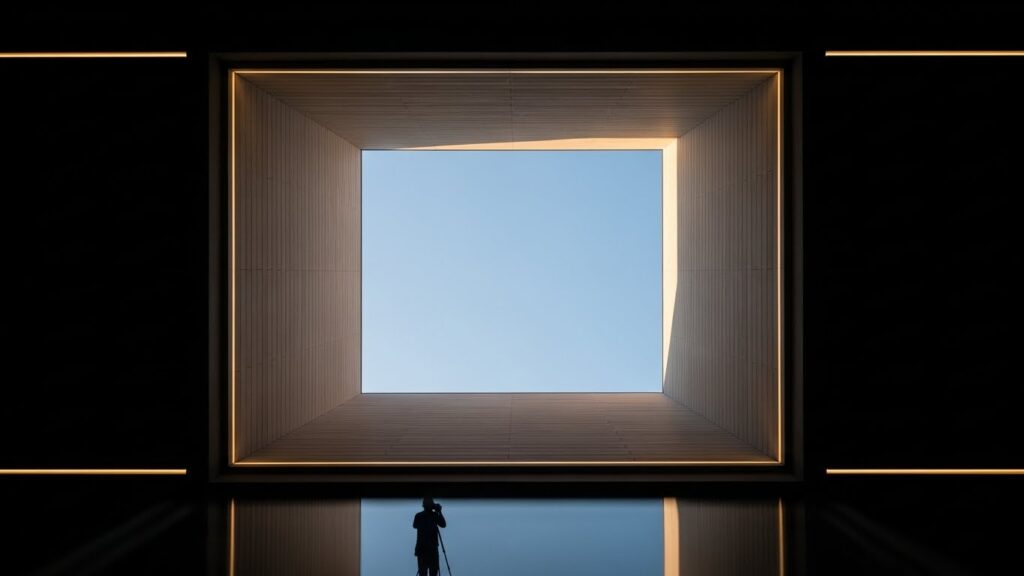
- Aperture (the hole): Roughly 14 ft × 14 ft, which frames a square of sky.
- Inner atrium: About 28 ft square, where people sit on benches.
- Seating: The space holds around 120 people across two viewing levels.
- Lighting system: A program of LED lights projects color inside the volume and onto the underside of the roof during the shows.
- Acoustics: The project includes speaker systems and geometry that enable sound and musical use.
Why these measurements matter: The aperture size and roof edge shape control reflected light, contrast, and the way the brain reads depth. Even a small change in size or color can alter the whole experience. That precision is why the work feels so exact and why photographing it can be hard.
The visitor experience — step-by-step what to expect
Here is a simple plan for what happens during a visit:
- Arrive early (30–45 minutes before show).
Choose a bench and let your eyes adapt. The effect grows stronger when your eyes have time to settle. - Sit quietly and wait.
People come to be still. Talking and phone noise can disturb others. - Light program begins.
The LED lights will start several minutes before sunset or sunrise and shift slowly across a sequence that lasts around 30–45 minutes. - Watch the color change.
Initially the colors may look odd or intense. After a few minutes your perception calms and the shifts feel seamless. - After the program.
Many people stay for a few minutes to talk softly or sit and let the afterimage fade.
Rules and etiquette:
- No flash photography during the show.
- Keep noise low and respect the contemplative atmosphere.
- Follow any staff instructions or posted rules.
Current status & closures — what to check before you go
Important: The Skyspace closed in May 2024 because of nearby construction and maintenance. Public notices have indicated a planned reopening in Spring 2026. Before booking travel, always check Rice University’s official pages or the Moody Center for the Arts site for current status and any schedule changes.
Why this matters for European travellers: A long-haul trip requires time and money. Confirming the Skyspace’s public access avoids wasted journeys. If you publish a guide, include a live-status banner with a link to the official page so readers see the latest update.
How Twilight Epiphany compares to Turrell sites in Europe — quick table
| Feature | Twilight Epiphany (Rice, Houston) | Typical Turrell sites in Europe |
| Year opened | 2012 | Various (1980s–2000s) |
| Scale | Large (72 ft roof, 14 ft aperture) | Many are smaller or indoors |
| Acoustics | Engineered for sound/performance | Often focused solely on light/perception |
| Visitor access | Daily programs when open | Varies; some by appointment |
| Travel for Europeans | Long-haul trip | Usually easier and cheaper |
Takeaway: Even if you’ve seen Turrell in Europe, Twilight Epiphany offers a distinct, larger-scale experience often paired with music and campus life.
Travel planning from Europe — step-by-step guide
This section helps European visitors plan a trip with clear steps.
Step 1 — Choose the best season
- Spring (March–May) and Autumn (September–November) are comfortable in Houston.
- Summer brings high heat and Humidity; it can be uncomfortable.
2 — Book flights
- Fly to George Bush Intercontinental Airport (IAH).
- Major hubs (London, Paris, Frankfurt, Amsterdam) have direct or one-stop flights.
3 — Plan local transport
- From IAH, expect a 30–40 minute taxi or rideshare to central Houston.
- Renting a car is an option, but traffic and parking should be considered.
4 — Choose where to stay
- Stay in Museum District, Midtown, or Rice Village for easy access to cultural sites.
5 — Plan time in the city
- Book 2–3 nights to allow one sunrise or sunset visit and time for museums (Menil Collection, Rothko Chapel, Museum of Fine Arts, Houston).
6 — Check entry and visa rules
- Apply for ESTA or relevant visa well in advance. Processing times can vary.
7 — Confirm Skyspace schedule and access
- Check the official Rice/Moody Center page before finalising plans. If the Skyspace is closed, choose other Houston cultural experiences.
Sample 3-day itinerary
- Day 1: Arrive, settle in, visit Menil Collection and local cafes.
- Day 2: Morning: Rothko Chapel; Evening: Twilight Epiphany sunset show.
- Day 3: Museum of Fine Arts, depart.
Photography & videography — simple settings and tips
The Skyspace is visually compelling but tricky to photograph. Light shifts and color tones can confuse cameras. Here are easy, practical tips.
Gear checklist
- Tripod (essential for low light).
- Camera that can shoot RAW.
- Wide-angle lens (24–35mm equivalent) and a medium lens (50–85mm).
- Remote shutter or silent timer to reduce vibration.
Basic camera settings (starting points)
- Before sunset: ISO 100–200, f/5.6, 1/60–1/200 (bracket exposures).
- During LED program: ISO 200–800, f/2.8–f/5.6, 1/4–1/30 (use tripod).
- Long exposures: ISO 100–400, f/8–f/11, 1–10 seconds.
- White balance: Shoot RAW; start at 3500–4500K in camera but adjust in post.
Composition tips
- Include people as silhouettes to show scale and add life.
- Frame the aperture — the square sky is the visual center.
- Use roof edge lines for clean geometry.
- Bracket exposures and consider HDR merging for high contrast scenes.
Smartphone tips
- Use a small tripod or stable surface.
- Use an app that allows manual control and RAW capture (if available).
- Record a short vertical time-lapse or quick video to show the progression — the effect reads better in motion.
Etiquette for photographers
- No flash during the show.
- Keep movement and noise minimal.
- Respect other watchers who prefer to experience the work without cameras.
Events, performances & educational programming
Twilight Epiphany is not only for light shows. The design supports sound and educational uses.
- The Shepherd School of Music at Rice uses the site for experimental concerts and sound projects.
- The two-level seating and built acoustic systems make it suitable for small performances.
- Rice sometimes schedules special events outside the daily LED programs; check the university calendar.
Accessibility & on-site practical tips
Accessibility
- The Pavilion was designed with wheelchair access.
- Visitors with mobility needs should contact Rice visitor services in advance for specific guidance.
Directions & parking
- From downtown Houston, drive or taxi 10–20 minutes depending on traffic.
- Visitor parking exists but can be limited or closed during special events. Check campus parking maps before arrival.
On-site facilities
- Restrooms and campus services are available nearby, but verify closures on event days.
- Bring water in warmer months; evenings can cool down so layers help.
Rules
- No smoking.
- No flash photography during shows.
- Follow staff instructions and posted signage.
Conservation & maintenance — why closures happen
Public art needs care and periodic maintenance. Reasons for temporary closure include:
- Roof membrane repair to keep the building watertight.
- LED system maintenance (lights and controls require servicing).
- Structural or safety checks to ensure visitor safety.
- Nearby construction that interferes with safe access.
Current note: The Skyspace closed in May 2024 for nearby construction and maintenance. Planned reopening has been stated for Spring 2026. Always verify the official site before traveling.
Pros & Cons
Pros
- Unique James Turrell experience that rewards patient looking.
- Big, meditative, and visually striking.
- Often free to attend (confirm current policy).
- Valuable for music, performance, and interdisciplinary study.
Cons
- Currently closed through parts of 2024–2026 — check status.
- Long travel for European visitors.
- Weather-dependent and sometimes hard to photograph.
FAQs
A: Historically, yes. The sunrise and sunset programs have been free. Policies can change. Always check Rice’s official page before you go.
A: The LED programs run around sunrise and sunset. Times change with the season. Check the official schedule.
A: The Pavilion was designed with accessibility. Contact Rice visitor services to get exact details before your visit.
A: Yes, you can. Avoid flash during the show. Use a tripod and shoot RAW if you can.
A: It closed in May 2024 for nearby construction and maintenance. Rice plans to reopen in Spring 2026. Check Moody Center or Rice’s page to confirm.
Conclusion
Twilight Epiphany is a quietly powerful work by James Turrell. It invites you to slow down and watch how light transforms the sky. For visitors from Europe, it can be worth the journey if you appreciate immersive art, photography, and thoughtful public rituals. Yet careful planning matters: verify the current access status before you buy flights. Bring a tripod, arrive early, and allow time to simply sit and notice the shifting color.