Introduction
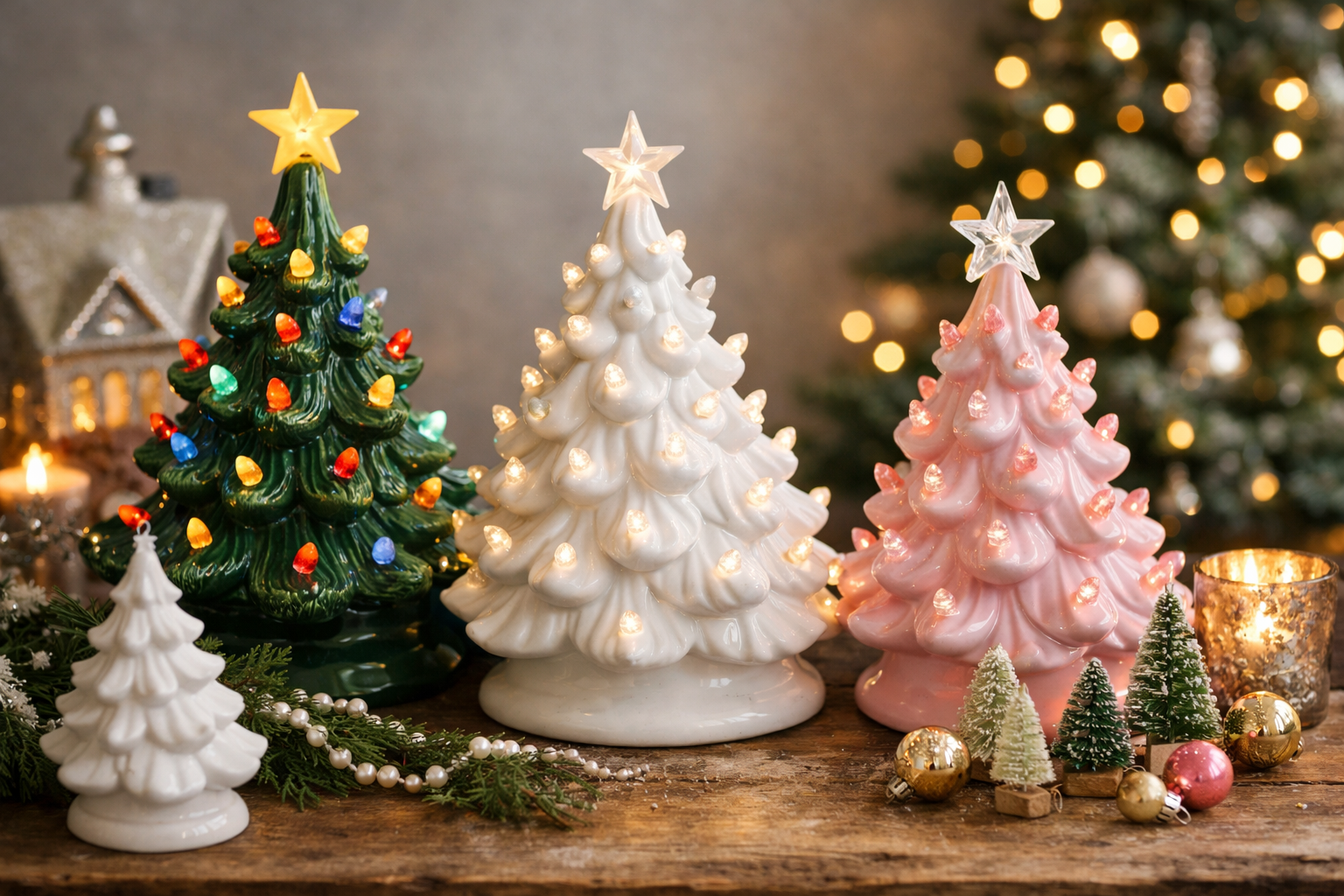
A ceramic Christmas tree is a small, glowing decoration that brings warmth and charm to a room. These trees were very popular from the mid-1900s through the 1970s and are loved again today by people who like Vintage Style, cosy corners, and small-space decorations. You can find large vintage models that light up with tiny colored bulbs, or new compact designs that run on batteries or LEDs. Some trees arrive as plain bisque pieces that you can paint yourself. Some are glossy and shiny; others are matte and calm.
This long guide will help you in plain, simple words. It explains the history of these trees, how to identify and date vintage ceramic Christmas trees, how to choose the right tree for your home, how to clean and repair them, and how to style them for European homes. It will also show where to buy them—thrift shops, flea markets, auctions, Etsy, and eBay—and how to do safe DIY lighting or paint jobs.
Background & History
What is a ceramic Christmas tree?
A ceramic Christmas tree is a decorative tabletop tree made from fired clay. The clay is shaped, fired, and glazed. Many of these trees have holes where small bulbs sit. Often they have a star on top. Some are electric and light up. Others are simple ornaments or paint-your-own bisque pieces.
When did they start?
These trees became common in homes between the 1950s and 1970s. At first, potters made some by hand. Later, factories used molds to make many at once. Small electric bulbs were a novelty and made the trees special. Over time, people kept them as holiday treasures.
Why are they collectible?
Some early or rare models were made by known potteries or used unique molds. These can be valuable today. A vintage ceramic Christmas tree with original bulbs and the original star can sell for more. The tree’s condition—no chips, no broken star, good wiring—matters a lot for value. If a tree has a maker’s mark or number, collectors can trace its age and maker.
European Trend Insights
Europe loves small, beautiful things that fit in apartments. That is one reason the ceramic Christmas tree fits modern European tastes.
- London: People mix vintage and modern pieces on mantels and small tables.
- Paris: Pastel or white ceramic trees with satin ribbons look chic in apartments.
- Milan: Bold color accents and luxury table settings use ceramic trees as centerpieces.
- Berlin: Flea market finds and painted-up DIY pieces are popular.
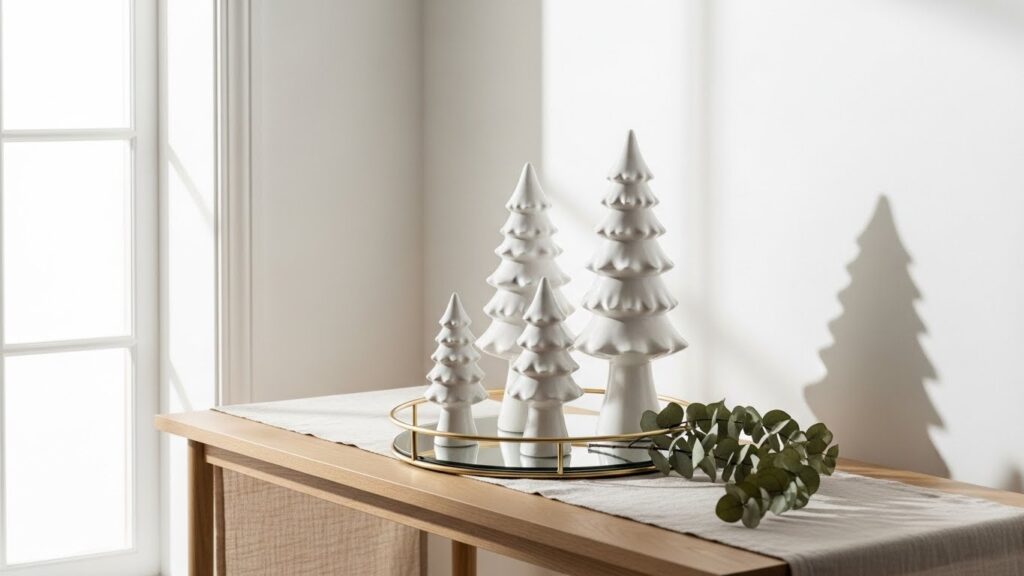
- Scandinavia: Minimal white or matte-finished trees fit the calm, bright style.
Why they work well in Europe:
- Many homes are compact, so table-top decor is perfect.
- Flea markets and second-hand shops are common and loved.
- Social media shows new styling ideas and makes these pieces trendy again.
Types & Finishes — simple guide
There are several common types of ceramic Christmas trees. Each type fits a different need.
| Type | Typical Size | Best For | Price Range (Europe) |
| Vintage lighted | 12–24 in | Collectors, mantels | €20–€500+ |
| Modern reproductions (glossy) | 6–18 in | Trendy decor, gifts | €15–€70 |
| Matte / artisan | 8–18 in | Scandinavian / minimal interiors | €25–€150 |
| Bisque (paint-your-own) | 6–18 in | DIY, craft nights, kids | €8–€40 |
| Mini sets / novelty | 3–8 in | Table centerpieces, tiered displays | €10–€40 |
How to choose the right ceramic Christmas tree
Here is a short checklist to use when you shop.
- Measure the space. Make sure the tree fits your shelf, mantel, or table.
- Check base and weight. Heavier trees are more stable.
- Look for cracks or crazing. Crazing is small age cracks in glaze; long cracks are damage.
- Inspect wiring and sockets. Old plugs and brittle cords mean rewiring. Battery or LED models are safer.
- Flip the base for maker marks. Markings and numbers often help date the tree.
- Decide lighting type. Replaceable sockets let you use LED bulbs later. Integrated LEDs are low fuss.
- Pick color and scale. Match your room color and the size of your surface.
Buyer personas:
- Collector: Wants original bulbs, a maker mark, and good condition.
- Trendy decorator: Chooses modern LED or battery trees in neutral or pastel tones.
- Gift shopper: Buys mini sets or paint-your-own bisque kits for family fun.
Collector’s guide — identify, date & value vintage ceramic Christmas trees
If you want to collect or spot real vintage pieces, these signs help you judge them.
Maker marks & numbers
Many older trees have a maker mark, patent number, or mold number stamped in the base. These marks can be used to find who made the piece or when. A clear mark often raises a tree’s value.
Bulb sockets & wiring
Early trees use small incandescent bulbs. The sockets and the plug type change over years. Cloth-Covered cords are a sign of age. Brittle or cracked wiring means the tree needs rewiring for safety.
Glaze style & weight
- Glossy, thick glazes were common in the 1960s–70s.
- Hand-painted or textured glazes may be from small studios.
- Heavier clay weight usually means sturdier, older pieces.
Bulbs, star, and original parts
Original bulbs and star toppers are important to collectors. If these pieces are missing, value drops. However, safety may require replacing old bulbs with low-heat LEDs.
Price bands (guide)
- Thrift finds: €5–€40 — common, chipped, or unmarked pieces.
- Modern reproductions: €10–€70 — safe, new pieces.
- Collectible vintage: €100–€500+ — marked, good condition, rare models.
Cleaning, repair & storage — safe steps
Cleaning (gentle and safe)
- Dust with a soft brush or microfibre cloth.
- For light grime, use a damp cloth with a drop of mild dish soap. Wring the cloth well—do not soak the ceramic.
- Never use scouring pads, bleach, or strong cleaners—they destroy glaze.
Repair & rewiring (safety first)
- If the wiring looks old or cloth-covered, get a qualified electrician to rewire the base. Safety is more important than keeping old wiring intact.
- For bulbs, prefer low-heat LED replacements that match the socket. LEDs lower fire risk and look similar.
- Small chips are best handled by a ceramic restorer. Avoid household glues that yellow.
Storage
- Wrap the tree in acid-free tissue paper.
- Place protective padding around the star and any fragile bulbs.
- Store upright in a solid box and keep in a dry, stable place. High heat or cold may harm the glaze.
Styling ideas — 10 looks for European homes
These simple styling ideas work well across many rooms.
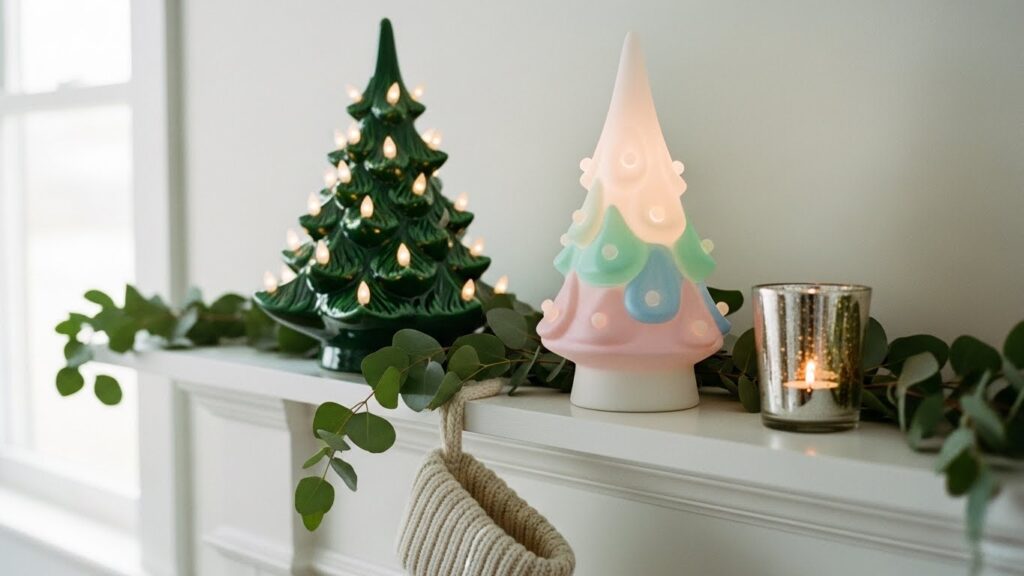
- Vintage mantel vignette — place a 14–18 in vintage glossy tree, add mercury glass votives and knitted stockings.
- Scandi minimal trio — three white or matte trees in graduated sizes on a console with dried eucalyptus.
- Retro 70s corner — glossy green tree, small tinsel, warm lamp, colorful rug.
- Pastel Parisian — blush or mint tree, velvet ribbon, small gold decorations for a chic apartment.
- Nursery-safe shelf — battery mini tree, plush toys, and no small loose bulbs.
- Dining centrepiece — a taller tree on a mirrored tray with pine sprigs and a few tealights.
- Rustic farmhouse — matte tree on a wooden table, burlap runner, pinecones.
- Glam holiday table — white tree with gold leaf accents and crystal candleholders.
- Seasonal swap setup — change light colors or small ornaments to suit other holidays.
- Collector’s shelf — labeled shelves, LED backlighting, and magnified shots of maker marks.
Where to buy — clear sources & tips
Modern shops & makers
Large home stores sell modern ceramic Christmas trees—good for safe LED models. Independent potteries and Etsy sellers offer unique handmade pieces.
Online marketplaces
- eBay: Great for vintage finds. Use saved searches and check completed sales to see what things actually sold for.
- Etsy: Offers both vintage items and new handmade pieces.
Thrift stores & flea markets
- Bring a torch to check the base for maker marks.
- Inspect sockets and bulb holes.
- Be ready to negotiate; sellers sometimes overprice nostalgia.
Collector groups & auctions
- Facebook groups, Reddit threads, and specialist forums can show rare finds and private sales.
- Specialist auctions may list rare or high-value pieces.
DIY: paint, glaze and build-your-own
Paint-your-own bisque tree (simple craft)
- Clean the bisque with a soft cloth and mild soap. Let it dry fully.
- Prime if you plan to use acrylic paints. Follow paint directions.
- Paint with acrylics; they dry fast and are easy to use. (Acrylics are not dishwasher-safe.)
- Seal with a clear spray sealer made for craft projects. Let it dry for the time recommended.
- Light it with a battery LED insert or a safe low-voltage kit.
For a permanent glazed finish
To get a true glossy glaze that lasts, you must use ceramic glaze and fire the piece in a kiln. This is done at a pottery studio and is not a home DIY step.
Adding LED inserts
- Use low-voltage LED parts and follow the kit’s instructions.
- For any mains-level wiring, hire a professional.
Safety note: Never try mains rewiring unless you are trained and follow local electrical laws.
Table — Vintage vs Modern ceramic Christmas trees
| Feature | Vintage Lighted Trees | Modern Reproductions |
| Authenticity & value | High if marked & intact | Low; mainly decorative |
| Wiring & safety | Often outdated—may need professional rewiring | Usually LED or battery; safer |
| Price | €20–€500+ | €10–€70 |
| Finish | Classic glossy glazes | Wide color range—pastels, matte |
| Where to buy | Flea markets, auctions, eBay | Retailers, Etsy, stores |
Pros & Cons
Pros
- Compact and perfect for small European homes.
- Very photogenic and great for social posts.
- Wide variety: vintage collectible items or modern LED models.
- Easy upkeep with LED options.
Cons
- Vintage wiring can be unsafe and may need a professional fix.
- Value depends heavily on condition.
- Some reproduction finishes are not true ceramic glaze and can degrade.
Travel tips — where to hunt great finds in Europe
- Best season: Autumn to early December when markets add holiday items.
- Bring a small torch: Handy for checking maker stamps inside the base.
- Plan shipping: Leave space in luggage or arrange insured shipping for fragile finds.
- Budget for repairs: Set aside €20–€150 for rewiring or chip repair.
- Markets to try: Portobello Road (London), Marché aux Puces de Saint-Ouen (Paris), Mauerpark / Nowkölln Flohmarkt (Berlin), Mercatino dell’Antiquariato (Milan).
FAQs
A: Yes. Some vintage pieces with maker marks and original bulbs can be valuable. Condition is very important.
A: Usually yes. Use low-heat LED bulbs that fit the socket. If unsure, ask an electrician.
A: Look for maker marks, base numbers, socket types, glaze style, and compare to auction pictures.
A: Wrap in acid-free tissue, keep upright in a rigid box, store in a dry place with stable temperature.
A: Online auctions, marketplaces, and specialist lamp or vintage parts shops sell replacements and kits.
Conclusion
A Ceramic Christmas Tree is a small object that holds a lot of charm. It suits small homes and many decorating styles—from minimal Scandinavian rooms to ornate European mantels. Vintage ceramic Christmas trees can have collectible worth if they have maker marks, original bulbs, and good condition. Modern reproductions give you safe, low-maintenance choices in new colors and LED power. Learning to spot marks, checking wiring, and understanding finish types will help you buy smart.This guide gives you the tools to find, care for, restore, and style your ceramic Christmas tree. Use the buyer checklist when you shop, store pieces carefully between seasons, and upgrade bulbs to low-heat LEDs for safety.