Introduction
People search “How Long is Hanukkah” because they want a short clear answer fast. But many readers also want context: when will it happen this year on the regular calendar, how nights are counted, what the menorah is, how to light it, and what to do if Hanukkah overlaps with Shabbat. If you run a website such as TrendyOccasion, this article is a ready-made pillar you can publish and expand with city guides, recipe cards, a printable menorah lighting chart, and a short video.

What does “eight nights” really mean?
1 The main fact — eight nights, eight days
When people ask how long is Hanukkah, the direct reply is simple: eight nights. The holiday lasts eight nights and the same span of days. The ritual each night is to light candles on a special menorah called a hanukkiah. The Jewish day begins at sunset, so the holiday begins on the evening before the calendar date 25 Kislev and continues for eight evenings and days after that.
2 Nights vs days — why some say “9 days”
Sometimes you’ll see “nine days” used casually. This is usually a small counting mix-up: if someone counts the starting evening plus eight full days, they might call it nine days. The common and correct terms are eight nights (the usual phrasing) or eight days (meaning it covers parts of eight calendar days). For clarity on your site, use eight nights and include a one-line explainer: Jewish days run sunset to sunset.
3 Why Hanukkah moves in the regular calendar
The Hebrew calendar is lunisolar: it follows the moon but also adjusts to match the sun’s seasons. Because of this, the date 25 Kislev does not fall on the same Gregorian date each year. Usually Hanukkah lands between late November and late December, but the exact dates change yearly. That’s why an automated date converter or a “Hanukkah this year” widget is useful on a website.
The origin story — why it lasts eight days
1 The rabbinic story: the miracle of the oil
The most widely told account says that after the Jewish fighters (the Maccabees) retook the Temple, they found only one sealed jar of pure oil for the menorah. That oil should have lasted one day but — the story goes — it burned for eight days. The rabbis explained the holiday around that miracle, and lighting candles each night remembers the miracle of the oil.
2 The historical view: rededication and victory
Historians point out that Hanukkah also celebrates the rededication of the Second Temple and a victory in battle by the Maccabees. The historical record (books like the Maccabees) emphasizes the rededication; the oil miracle is a later rabbinic emphasis. Today many people mention both the military victory and the oil miracle when they explain why Hanukkah is eight nights long.
Rituals: the menorah, the shamash, and the lighting rules
1 What is a hanukkiah and the shamash?
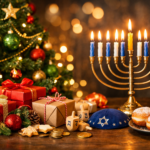
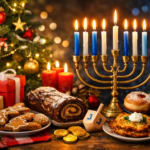
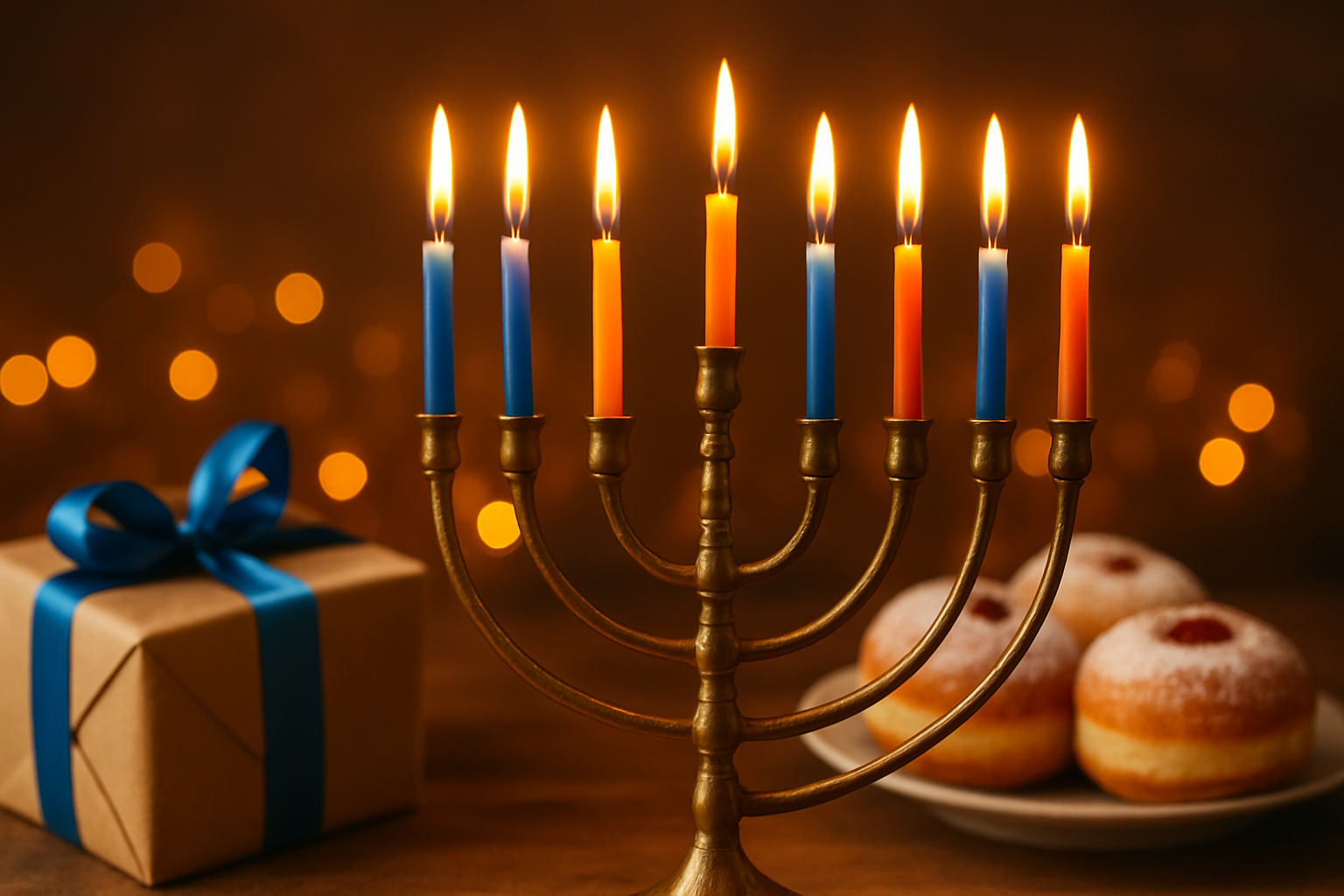
A hanukkiah (commonly called a menorah in English) for Hanukkah has nine branches: eight holders for the nights plus one shamash, sometimes called the helper candle. The shamash is used to light the other candles and is not counted among the eight. On many hanukkiahs the shamash is placed higher or set apart so it is visually different.
2 How to place and light the candles — simple steps
Here’s a short clear method:
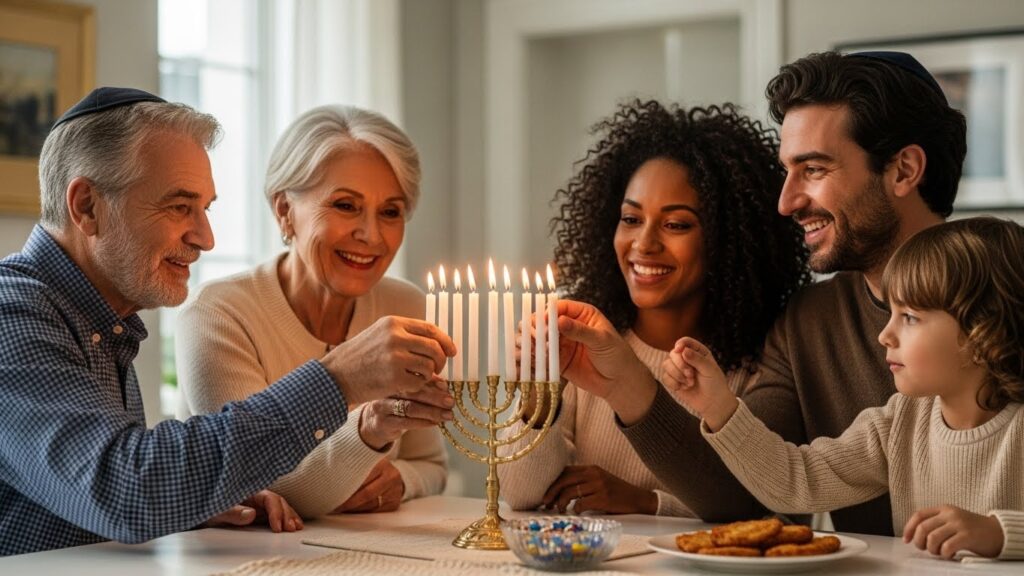
- Place candles on the hanukkiah from right to left.
- Light from left to right — light the newest candle first.
- Each night add one candle until you have eight lit on the final night.
- Say the blessings before lighting; the first night often includes an extra blessing called Shehecheyanu (a blessing that thanks God for reaching this moment).
- Use the shamash to light the other candles.
3 Variations and rules for special cases
Different Jewish communities have small variations: some people use oil lamps instead of candles; some light in a slightly different order; some recite slightly different tunes for the blessings. When Hanukkah overlaps Shabbat (the Jewish Sabbath), lighting times and blessing procedures may change to respect Shabbat rules — communities follow rabbinic guidance for those nights.
Night-by-night lighting table — quick reference
| Night | Candles lit (not counting shamash) | Typical blessings | Short note |
| 1 | 1 | Blessings + Shehecheyanu | Light shamash, then one candle |
| 2 | 2 | Blessings | Add second candle; light newest first |
| 3 | 3 | Blessings | — |
| 4 | 4 | Blessings | — |
| 5 | 5 | Blessings | — |
| 6 | 6 | Blessings | — |
| 7 | 7 | Blessings | — |
| 8 | 8 | Blessings | Final night; all eight lit |
A clear step-by-step guide: lighting a hanukkiah for first-timers
If you are new, follow these steps. They make a short checklist you can print or use as a short video script.
- Find or buy a hanukkiah that has 9 branches (8 plus shamash).
- Get candles or oil: one set for nights plus one shamash candle or oil lamp.
- Place candles from right to left in the holder.
- Say the blessings (text or video help). On the first night, include Shehecheyanu.
- Light the shamash first.
- Use the shamash to light the other candles, starting with the newest (left-most) and moving right.
- Sing or say a short prayer after lighting if you wish.
- Leave candles burning safely and do not leave them unattended.
Hanukkah across Europe — events, culture, and community
1 Public menorah lightings and why they matter
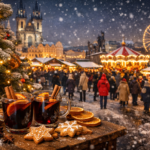
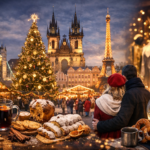
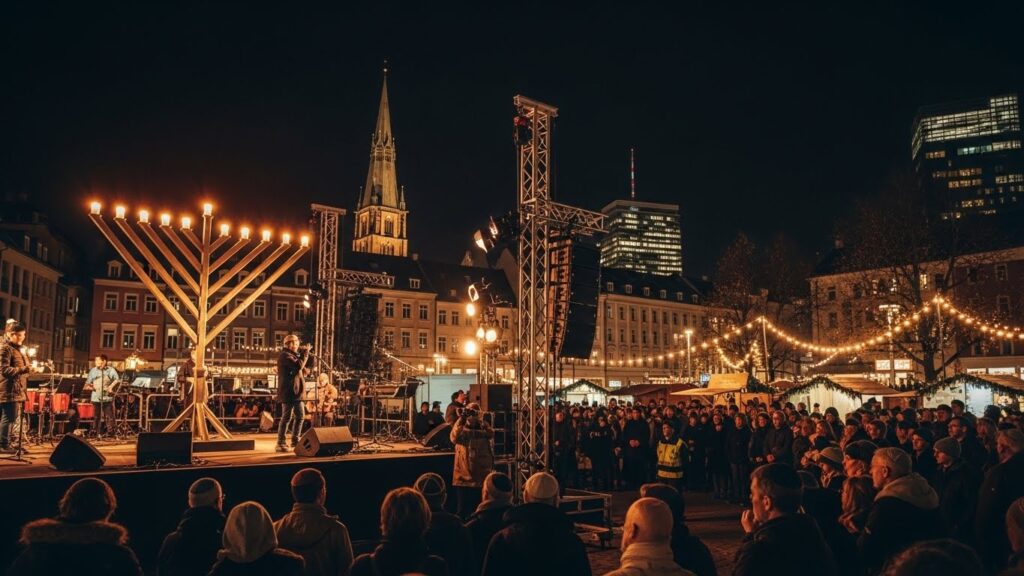
Across many European cities, public menorah lightings have grown popular. These lightings are often staged in squares or city centers and can include music, speeches, and food stalls. They help Jewish communities celebrate publicly and invite non-Jewish neighbors to learn and join in.
2 City Snapshots — What to Expect
- Paris: Big public events in central areas, sometimes with large crowds and media attention.
- London: Community festivals and menorah lighting in central spots; family-friendly activities.
- Berlin: Cultural events that often include history talks and performances.
- Milan / Amsterdam / Barcelona: Smaller but lively events with local flavors and food.
Food, fashion, and lifestyle — ways people celebrate
1 Food: traditional and local twists (H3)
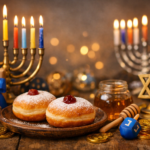
The most known Hanukkah foods are latkes (potato pancakes) and sufganiyot (jelly doughnuts). Across Europe, local bakeries and cooks make variants:
- Germany: bakeries sell Berliner-style doughnuts for Hanukkah.
- Scandinavia: fish dishes may appear alongside fried treats.
- Mediterranean cities: olive oil–based recipes or local pastries might feature.
2 Fashion & gatherings
Hanukkah takes place in the colder months in Europe. Outfit ideas:
- Urban chic: coats, scarves, boots for public lightings in city centers.
- Cozy family night: knit jumpers and casual wear at home gatherings.
- Formal community events: dresses, smart jackets, and festive touches.
3 Gifts & modern customs
While gift-giving is not mandatory, many families give small presents or chocolate coins (“gelt”), and experiential gifts — like theater tickets or museum passes — are popular, especially in European cities with rich cultural calendars.
Travel tips — best places in Europe to experience Hanukkah
1 Where to go
- Paris: large public events and museums; plan meals early.
- London: accessible central events and family activities.
- Berlin: rich cultural programming and tours of Jewish history.
- Milan, Amsterdam, Barcelona: regional events with distinctive local food and music.
2 Practical travel hacks
- Check local times: public lightings usually happen at dusk but check community sites for exact times.
- Dress warm: outdoor lightings occur at night in winter.
- Book early: holiday season can raise travel costs.
- Respect organizers: some events have security or special rules—follow them.
Hanukkah vs other winter festivals — short comparison
| Feature | Hanukkah | Christmas | Winter Solstice |
| Length | 8 nights | One main day (plus season) | Single day/event |
| Origin | Temple rededication / oil story | Birth of Jesus | Astronomical |
| Ritual | Lighting menorah nightly | Church, gifts, lights | Fire or light rituals |
| Foods | Latkes, sufganiyot | Roasts, desserts | Regional/seasonal foods |
| Public events | Menorah lightings, concerts | Lights, markets, parades | Solstice gatherings |
Pros & Cons
Pros
- Simple rituals: lighting candles is easy and family-inclusive.
- Public visibility: city lightings create community pride and outreach.
- Adaptable: people add modern customs like small gifts and themed events.
Cons
- Commercial overlap: close timing to Christmas can push consumerism.
- Historical complexity: combined military and miracle stories can confuse readers wanting one explanation.
- Security Needs: large public events sometimes need planning and safety measures.
FAQs
A: Hanukkah lasts eight nights and eight days, starting on the evening of 25 Kislev (Hebrew calendar).
A: Rabbinic tradition says a small jar of consecrated oil miraculously burned for eight days in the Temple after rededication. That miracle is the reason for the eight-night observance.
A: It changes each year. Hanukkah usually falls between late November and late December because the Hebrew calendar is lunisolar.
A: No. The shamash is the helper candle used to light the eight candles and is not counted.
A: Rules change slightly. People may light earlier and follow rabbinic guidance about which blessings to say. Check local community notes if you are unsure.
Conclusion
Hanukkah is, at its heart, a short and simple festival — eight bright nights that blend history, ritual and family warmth. Whether you’re lighting a hanukkiah for the first time, joining a public menorah lighting in a European city, or cooking up latkes and sufganiyot at home, the core is the same: adding light and joy to the darkest weeks of the year.